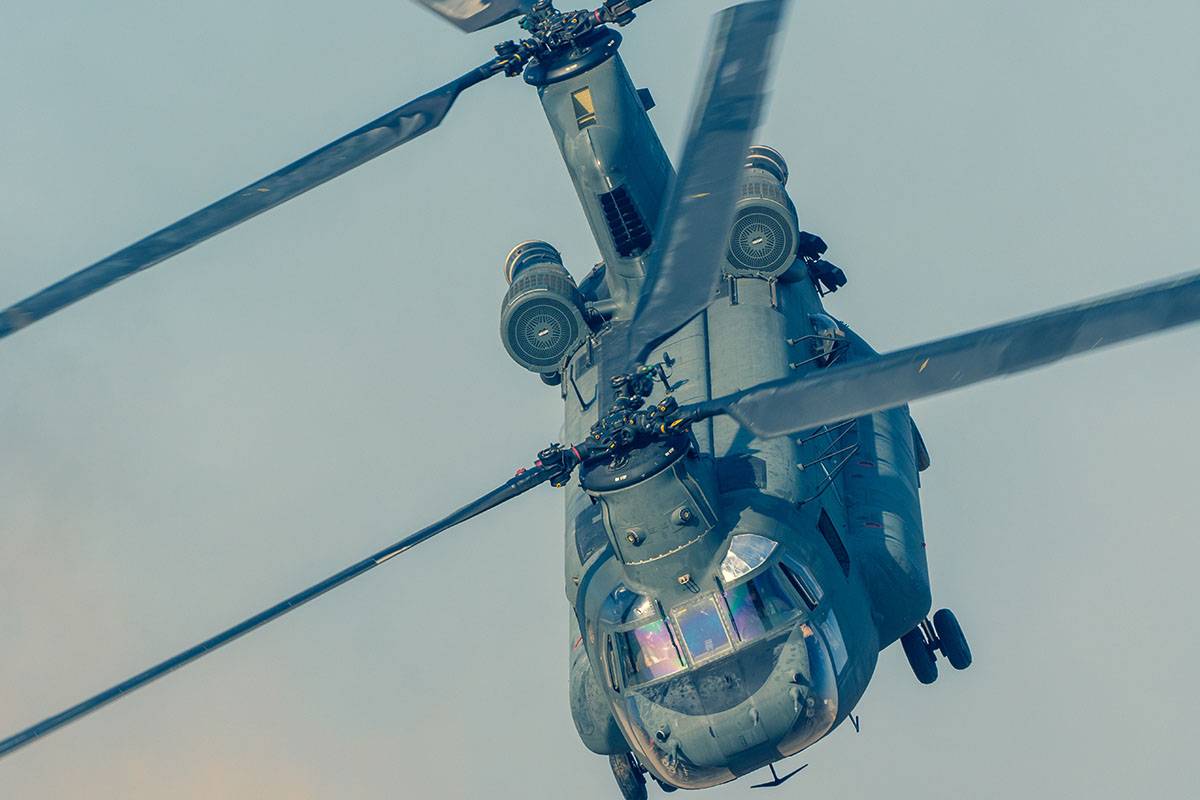
Chinook Helicopter in Dive
|

Unbelievable Chinook Helicopter Extraction Video

Extreme Chinook Helicopter Troop Extraction. This is totally insane and the pilot is awesome!  It looks like this was a video taken by a US Soldier in the Middle East.  The Chinook Pilot definitely has some serious piloting skill and confidence.  I can’t imagine how hard it would be to hover the Chinook on it’s tail and allow the soldiers to load from the rear.

Check out this Chinook Helicopter Performance video.  It’s easy to think that flying Chinooks would be ‘boring’, but it’s obviously a super powerful helicopter.

Subscribe to the DrMitsos Youtube Channel

The Final Mission of Extortion 17: Special Ops, Helicopter Support, SEAL Team Six, and the Deadliest Day of the US War in Afghanistan

Extortion 17 Helicopter Book

On August 6, 2011, a US Army CH-47D Chinook helicopter approached a landing zone in Afghanistan 40 miles southwest of Kabul. The helicopter, call sign Extortion 17, was on a mission to reinforce American and coalition special operations troops. It would never return. Insurgents fired at the Chinook, severed one of its rear rotor blades, and brought it crashing to the ground. All 38 onboard perished instantly in the single greatest moment of sacrifice for Americans in the war in Afghanistan.

Similar Posts

  • Vietnam Becomes the Helicopter War

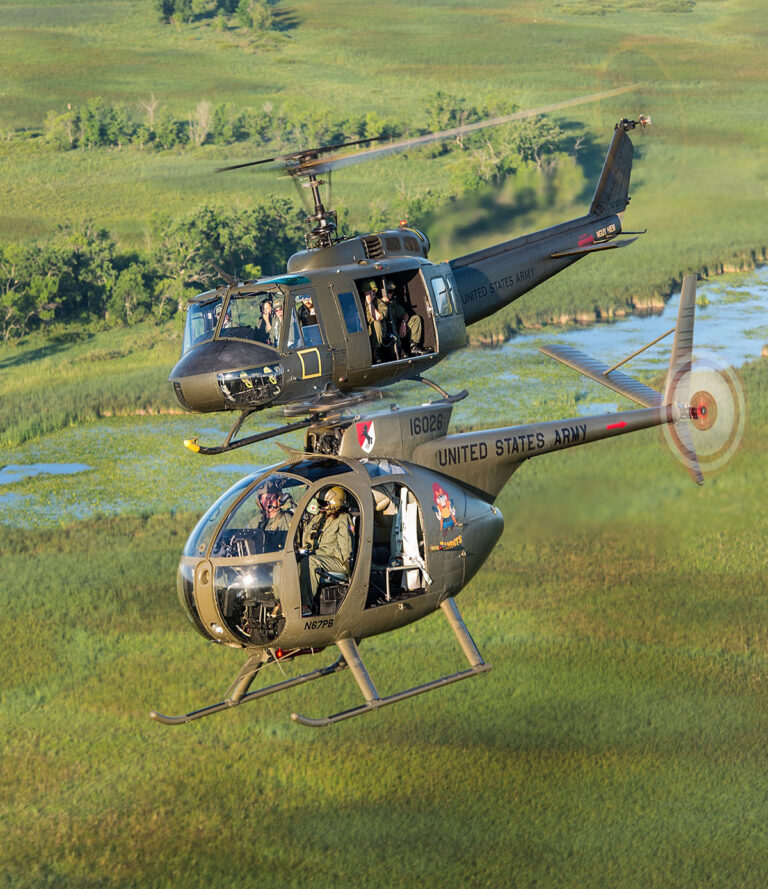
    In 1968, US Troops numbered over 535,000 and the Huey Helicopter was a familiar sight.  The helicopter proved its worth in the early months of 1968 when the Tet Offensive started in Vietnam Cities.  During the offensive, armed UH-1 gunships would fly on the flanks of the combat zone while UH-1 slicks delivered troops into a landing zone.  If the LZ was under fire from Viet Cong positions, the gunships would try to keep the Viet Cong under cover.  It was during this time that the AH-1G HueyCobra was introduced to the battlefield.

  • History of the Hughes OH-6 Cayuse Helicopter

    The inception of the OH-6 Cayuse traces back to the U.S. Army LOH (Light Observation Helicopter) competition in 1963. From its initial identity as the Hughes Model 369, it contended against 12 other designs. The spotlight ultimately centered on three: Hughes’ Model 369, Fairchild-Hillier’s H23 Raven, and Bell’s early OH-58 Kiowa model.

    While Bell’s offering fell short due to its underwhelming power, the Hughes Model 369 – rebranded YOH-6A with a robust 252hp Allison T63-A-5A engine – soared during the trials at Fort Rucker, Alabama in 1963.

  • The Boeing CH-47 Chinook: A Helicopter, A Hero, A Historic Icon

    Dive deep into the illustrious journey of the Boeing CH-47 Chinook, a true legend in the realm of aviation. This comprehensive guide takes readers on a whirlwind tour of the Chinook’s pivotal moments, from its innovative design breakthroughs to its indispensable roles in worldwide military and humanitarian operations. The article sheds light on the Chinook’s unmatched performance metrics, drawing insightful comparisons with its peers, and culminating in an exploration of its enduring legacy and impact on the fabric of aviation history. Whether you are an aviation enthusiast eager to understand technical nuances, a history buff keen on retracing the Chinook’s footprints, or someone simply fascinated by tales of human ingenuity and achievement, this article serves as your window into the world of the Boeing CH-47 Chinook. Discover the stories, the milestones, and the spirit of a helicopter that is much more than just a machine.

  • US Military Helicopters in Focus

    In the intricate theatre of modern warfare, the US military’s approach to conflict has evolved significantly, particularly within the rugged desert terrains of the Middle East. Central to this evolution are military helicopters, which have seamlessly transitioned from supporting roles to becoming linchpins in war strategy. These formidable flying machines have increasingly been used for vital attack and reconnaissance missions.

    Furthermore, the modern battlescape demands constant adaptation. Consequently, the US military is continuously in pursuit of advanced helicopter designs, encompassing cutting-edge technology to better equip them for their multifaceted roles on the battlefield.

  • |

    Helicopter Dustoffs in Vietnam

    Medevac helicopters revolutionized how wounded soldiers were treated in battle. 29% of all wounded US Soldiers died during World War II. This number was reduced to 26% during the Korean War due to advances in medical technology and the use of medevac helicopters like the Bell 47. This number was further reduced to 19% during the Vietnam War. To put the percentages in to perspective, medevac helicopters in Vietnam transported 400,000 wounded soldiers compared to 17,700 during the Korean War.