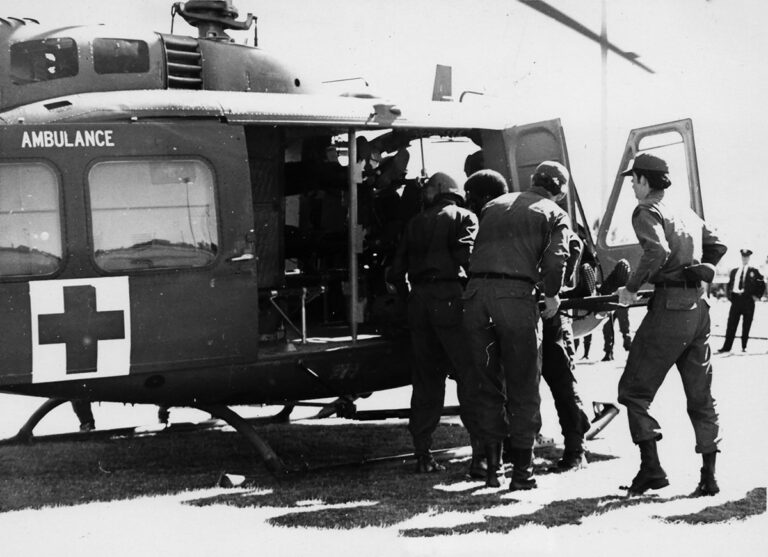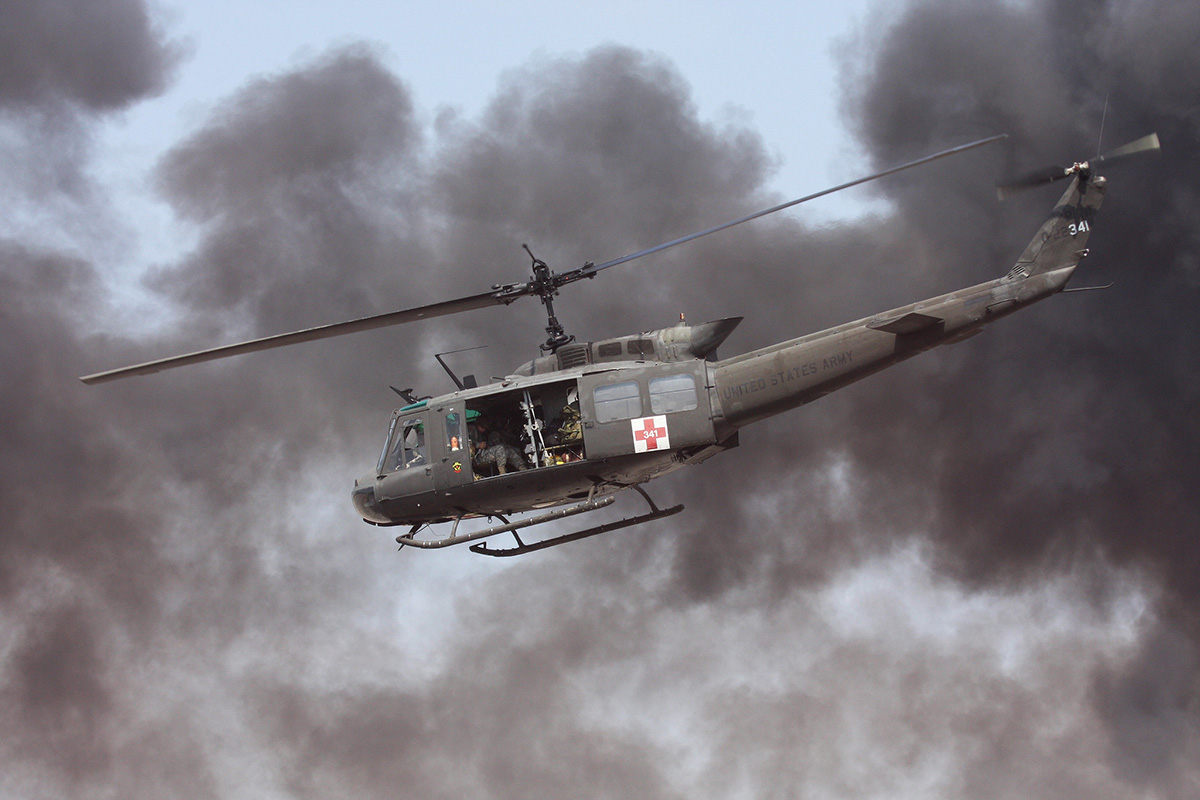
The Huey Medevac Helicopter Vietnam Workhorse
|

The Huey Helicopter as a Medevac in Vietnam

Introduction

Helicopters were instrumental in the Vietnam War. The challenging terrain made land travel difficult. Moreover, long distances involved complicated things further. However, helicopters, particularly the Huey, changed the game. This article will explore how the Huey Helicopter became a crucial part of Medevac missions in Vietnam.

Helicopters in the Vietnam War

Terrain and Battle Lines

The arduous terrain in Vietnam was a barrier. Consequently, land transport was slow and challenging. The shifting battle lines added to the complexity. Lessons from Korea had prepared helicopters for action this time.

Introduction of the Huey Helicopter

In April 1962, the 57th Medical Detachment brought five Bell UH-1 helicopters. The “Huey” proved invaluable and gained legendary status. Its first Medevac was on 12th May 1962, and it became a constant presence.
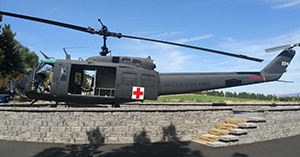
Landed Huey Medevac Helicopter

Advantages of the Huey Helicopter

Size and Protection

The UH-1 had size and protection benefits over earlier helicopters. A Huey could carry three stretchers inside, allowing immediate critical care. Thus, the mortality rate dropped from 4 percent in World War 2 to 1 percent in Vietnam.

The Personnel Rescue Hoist

The rescue hoist was a significant addition to the Huey. It allowed pilots to hover and collect casualties, reducing time for care. By 1966, this method was widespread across the combat zone.

DMZ DUSTOFF VIETNAM: True Stories of Unarmed Medevac Missions As Told By The Men Who Flew Them
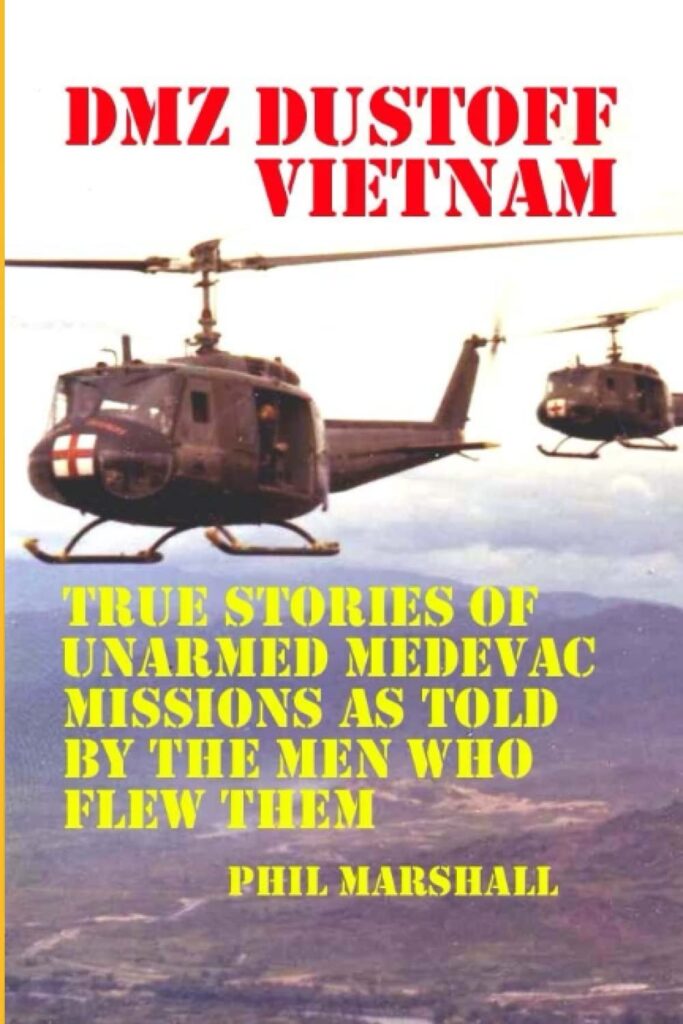
Grabbing the hand-held radio and transmitting on Guard, Halvorson alerted the tower to their situation. “This is Dustoff 7-oh-7 on guard, north of Quant Tri about 20 miles out. We have multiple wounded on board, no idea of their condition, no hydralics, and no instruments. We need a straight in. Clear everything, I need to be first in line”. It was about this this time that Gary noticed one of the few instruments still working was the engine temperature gauge, “And it was running pretty hot.”

Challenges and Bravery

Medevac Huey’s were unarmed, marked only by a red cross. Regardless, they were targets for the Viet Cong. This led to losses and acts of bravery by most pilots. Around a third of all crews suffered injuries due to hostile fire and crashes, making it a dangerous calling.

Other Medevac Helicopters

The primary Medevac helicopter was the Bell UH-1 Huey. Additionally, other helicopters like the Sikorsky H-19 Chickasaw, Boeing-Vertol H-21 Shawnee, and others aided in Medevac or casevac.

Conclusion

In summary, the Huey’s role as a Medevac helicopter in Vietnam was pivotal. Its size, protection, and adaptability made it indispensable. Furthermore, its use reduced mortality rates and increased efficiency. Despite challenges and dangers, the Huey’s legacy in Medevac during the Vietnam War remains a remarkable chapter in military history.

Similar Posts

  • CH-46 Sea Knight Helicopter – Workhorse of the Navy

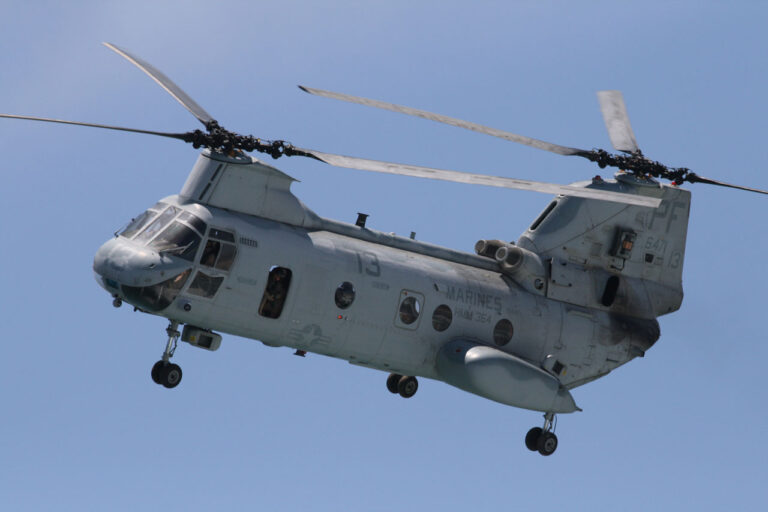
    The CH-46 Sea Knight Helicopter has been the workhorse of the Navy and Marine Corps medium-lift squadrons since it entered service in June 1964.  It was developed as the Vertol Model 107, which was also being designed for the civilian market, and was first flown on April 22, 1958.  An initial trial batch was ordered by the Army but this was redued when Vertol published drawings of the enlarged Model 114 which became the Chinook.  By 1960 Vertol had been absorbed into Boeing.

  • Medevac Helicopters in the Medical Field

    Helicopters, synonymous with adaptability and speed, have cemented their role in various sectors, both military and civilian. One of their paramount contributions remains medevac, or medical evacuation, a service that has transformed emergency medical responses. This airborne ambulance’s ability to arrive faster, more safely, and smoother than ground-based ambulances has made it a game-changer in life-saving missions.

  • Eurocopter Tiger Helicopter Unveiled: Beyond the Battlefield

    Dive deep into the world of the Eurocopter Tiger Helicopter, a premier combat aircraft, renowned for its advanced capabilities and dynamic operational performance. This article unfolds the rich history and developmental journey of this cutting-edge helicopter, offering a detailed insight into its distinctive features and specifications. Users will appreciate learning about the various models and variants, as well as the diverse user nations leveraging the Tiger for their defense needs.
    The Eurocopter Tiger stands out for its economic impact and is pivotal in shaping aerial combat strategies, excelling in safety and reliability. Explore upcoming upgrades and future models that showcase the potential of this helicopter in evolving combat scenarios. Learn about its future developments and the significant role it is poised to play in next-generation warfare. Whether you’re an aviation enthusiast, a professional in the field, or simply curious, this comprehensive guide provides a wealth of information, engaging insights, and answers to frequently asked questions about the Eurocopter Tiger Helicopter. Don’t miss out on discovering how this remarkable aircraft is redefining the boundaries of aerial combat!

  • Korean War and the Medevac Helicopter

    The development of helicopters during and after the Second World War proved the value and utility of rotary wing aircraft in combat situations. So much so that the Army, Navy and Air Force all set up their own helicopter development units.

    This enabled a shift in how critical care was delivered in combat. During previous conflicts, medical stations had to be as close to the front line as possible to shorten the path to care. This led to obvious risks and compromises in both treatment and conditions.  The advent of medevac helicopter meant that field hospitals could be set up in central locations and have patients delivered to them. That meant better care, better conditions and the ability to recover after operations before being evacuated. That alone saved hundreds of lives.

  • |

    Poland gets green light to buy Apache helicopters

    WASHINGTON — The State Department has cleared a sale of 96 AH-64E Apache attack helicopters worth about $12 billion to Poland, the Defense Security Cooperation Agency announced Aug. 21.

    The decision comes after the Polish Ministry of National Defence sent a letter of request to the U.S. government nearly a year ago to buy the Boeing-made helicopters for its armed forces.

  • History of the Hughes OH-6 Cayuse Helicopter

    The inception of the OH-6 Cayuse traces back to the U.S. Army LOH (Light Observation Helicopter) competition in 1963. From its initial identity as the Hughes Model 369, it contended against 12 other designs. The spotlight ultimately centered on three: Hughes’ Model 369, Fairchild-Hillier’s H23 Raven, and Bell’s early OH-58 Kiowa model.

    While Bell’s offering fell short due to its underwhelming power, the Hughes Model 369 – rebranded YOH-6A with a robust 252hp Allison T63-A-5A engine – soared during the trials at Fort Rucker, Alabama in 1963.