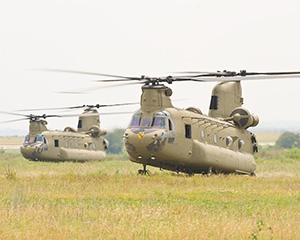
Boeing CH-47 Chinooks Taking Off

Top 10 Boeing CH-47 Chinook Helicopter Questions

The CH-47 Chinook is a highly capable and iconic military helicopter, so there are likely many common questions asked about it. Based on the search results provided, here are 10 of the most popular questions about the Chinook CH-47 helicopter:

  1. What are the key features and capabilities of the CH-47 Chinook?
    The Chinook is a heavy-lift, twin-engine, tandem-rotor helicopter known for its large cargo capacity, speed, and maneuverability. It can transport troops, artillery, equipment, and supplies. [1][2][3][4]
  2. What is the history and development of the CH-47 Chinook?
    The Chinook was developed in the late 1950s by Vertol Aircraft Corporation (later acquired by Boeing) to replace the Sikorsky CH-37 Mojave. It first flew in 1961 and entered service with the U.S. Army in 1962. [1][3][4]
  3. What are the different variants and upgrades of the CH-47 Chinook over the years? [1][3][4]
    The Chinook has undergone numerous upgrades and variants, including the CH-47A, B, C, D, and the current F-model, to improve its performance, avionics, and survivability.
  4. What are some of the notable missions and operations the CH-47 Chinook has been involved in?
    The Chinook has played a critical role in conflicts like the Vietnam War, as well as humanitarian relief efforts, medical evacuations, and aircraft recovery operations. [1][3][4]
  5. What are the Chinook’s top speed and lift capacity?
    The Chinook can travel at speeds up to 278 km/h (173 mph) and has a significant lift capacity, though the exact figures may vary by model. [2][3]
  6. What are the Chinook’s engine specifications?
    The Chinook is powered by a pair of Honeywell T55 turbine engines. [3]
  7. What are the dimensions and weight specifications of the CH-47 Chinook?
    The Chinook has dimensions of approximately 17.72 x 12.6 x 2.76 feet and a weight of around 38.2 oz. [5]
  8. What are some of the unique design features of the Chinook, such as its tandem rotor configuration?
    The Chinook’s distinctive tandem rotor design, with two large rotors rotating in opposite directions, allows it to achieve high lift and maneuverability without the need for a tail rotor. [2][3][4][5]
  9. What are the Chinook’s primary and secondary missions?
    In addition to its primary cargo transport role, the Chinook is also used for medical evacuation, search and rescue, parachute drops, disaster relief, and aircraft recovery.[3][4]
  10. What countries operate the CH-47 Chinook besides the United States?
    The Chinook is used by numerous militaries around the world, not just the U.S. Army.[4]

Citations:
[1] https://squadronnostalgia.com/shop/aircraft-models/helo-aircraft-model/ch-47-chinook/
[2] https://airmodels.net/592-ch-47-chinook
[3] https://aerospace.honeywell.com/us/en/about-us/blogs/33-things-you-probably-do-not-know-about-chinook-ch47
[4] https://www.chinook-helicopter.com
[5] https://militarybricks.com/store/aircraft/ch-47-chinook/

Similar Posts

  • |

    The History of the Bell 47 Helicopter

    The Bell 47 Helicopter stands as a monumental icon in aviation history. Originating in the mid-20th century, it pioneered roles in both civilian sectors and combat zones. From its crucial interventions in the Vietnam War to its transformative impact on emergency medical services and agricultural tasks, the Bell 47’s versatility and design have left an indelible mark. Journey with us as we explore the rich tapestry of its legacy, innovations, and enduring significance in the world of rotary-wing aircraft.

  • History of the AH-64 Apache Assault Helicopter

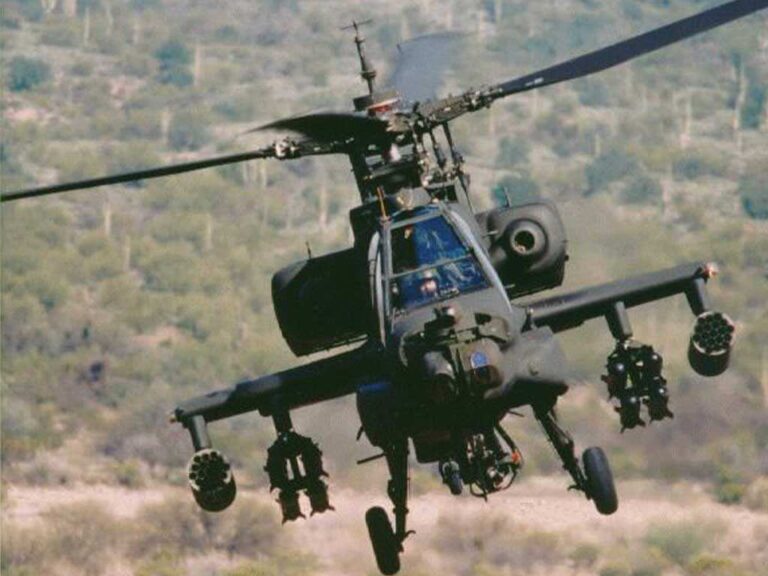
    The AH-64 Apache Helicopter was originally designed by Hughes in the 1970s to meet an Army requirement for an advanced attack helicopter.  Production was not authorized until 1982.  The first Apache helicopter deployed in 1986.  The AH-64A became the Army’s primary attack helicopter and a total of 824 were put into Army service.

    The Apache helicopter can react quickly to engage in close combat to destroy, disrupt or hold up enemy forces.

  • |

    The Bell UH-1 Huey Helicopter

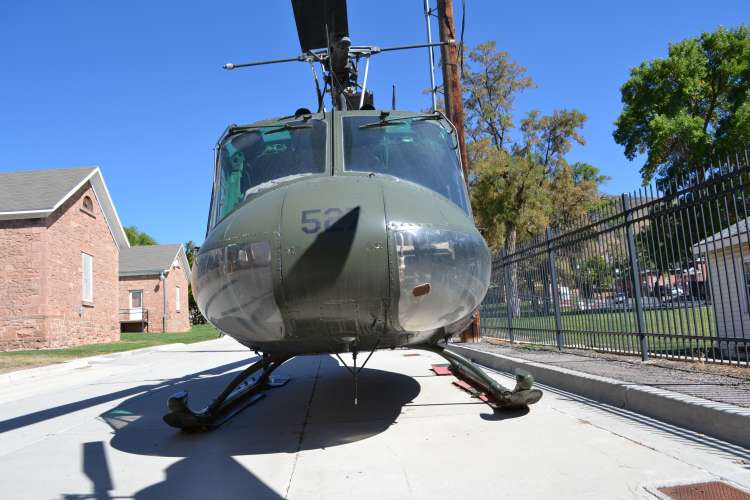
    In 1952 the US Army specified a requirement for new helicopter to serve as a medical evacuation, helicopter trainer, troop transport and general utility helicopter. Of the twenty companies that submitted designs, Bell Helicopter won the bid in late 1953 to build the first 3 prototypes based on their Model 204 design. The first flight of the XH-40 was October 20th, 1956 at Fort Worth, Texas and Bell was commissioned to build the first 100 HU-1A helicopters in March 1960, officially named Iroquois. While its official name is rarely used, the helicopter was nicknamed the Huey and the name stuck even after the US Army changed its designation to UH-1 “Huey” Helicopter.

  • History of the Hughes OH-6 Cayuse Helicopter

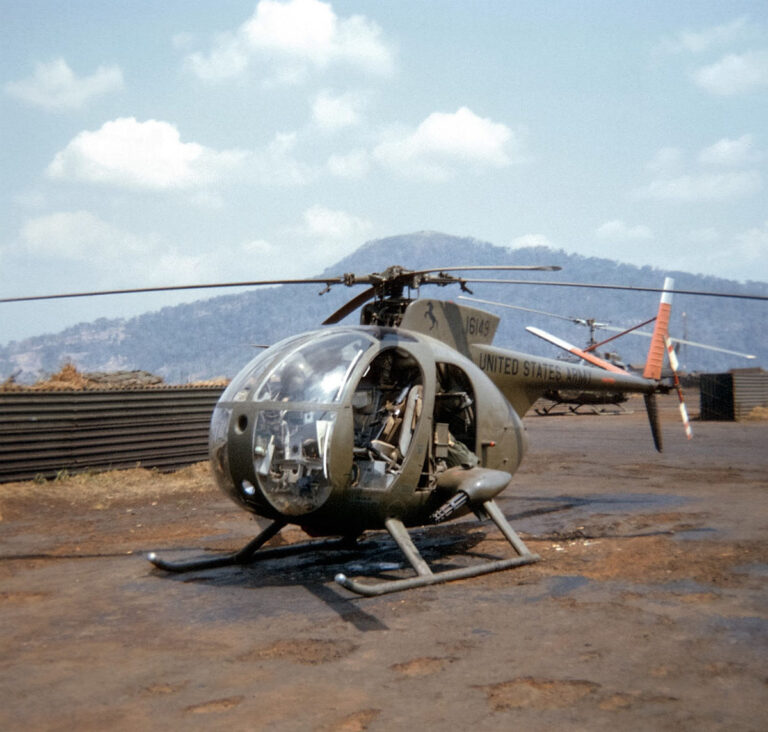
    The inception of the OH-6 Cayuse traces back to the U.S. Army LOH (Light Observation Helicopter) competition in 1963. From its initial identity as the Hughes Model 369, it contended against 12 other designs. The spotlight ultimately centered on three: Hughes’ Model 369, Fairchild-Hillier’s H23 Raven, and Bell’s early OH-58 Kiowa model.

    While Bell’s offering fell short due to its underwhelming power, the Hughes Model 369 – rebranded YOH-6A with a robust 252hp Allison T63-A-5A engine – soared during the trials at Fort Rucker, Alabama in 1963.

  • AH-1W SuperCobra Helicopter – Taking the Fight to the Enemy

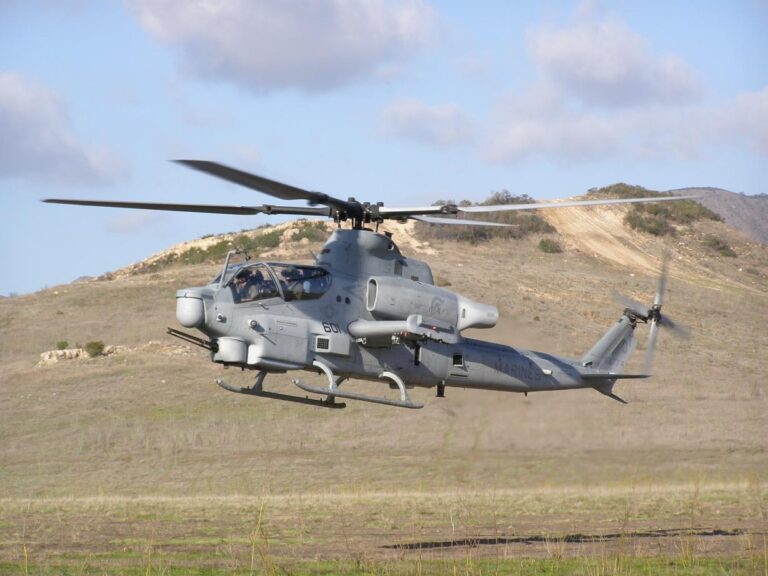
    The AH-1W SuperCobra twin-engined attach helicopter, delivered to the USMC from 1986, was developed from the ubiquitous AH-1, versions of which served the Army (AH-1G) and Marines (AH-1T SeaCobra).  They all have their roots in the Bell company’s 1950s studieds related to armed helicopters that led to the OH-13X modified version of the Bell 47/AH-47 Sious and the UH-1/AH-1 Huey/Model 209 HueyCobra. The later entered Army service as the AH-1G in the 1960’s, and were deployed to Vietnam as gunships from September 1967. 

  • The Comprehensive Guide to the Mil Mi-28 Helicopter

    Dive into the world of the Mil Mi-28 helicopter, an engineering marvel that stands tall in the annals of military aviation. This comprehensive guide unravels the rich tapestry of the “Night Hunter,” from its historical inception to its pivotal role on the global stage. Discover the technical intricacies that distinguish the Mi-28, the innovations that set it apart, and its comparative strengths against other iconic helicopters. Further, gain insights into its vast global footprint, from countries that deploy it as a strategic asset to the future upgrades that promise to elevate its prowess. This article is a treasure trove for military enthusiasts, researchers, and anyone intrigued by the blend of technology and strategy in the skies. Embark on a journey with the Mil Mi-28 helicopter, a testament to human ingenuity and a beacon of aerial excellence.