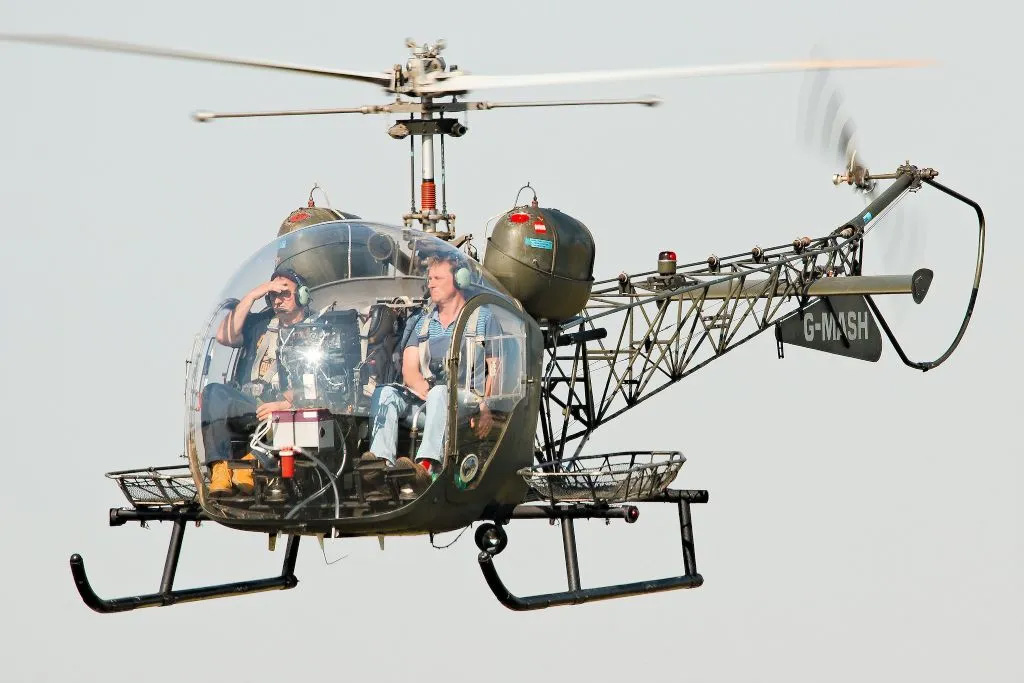
Iconic Bell 47 Helicopter in Flight
|

The History of the Bell 47 Helicopter

When was the Bell 47 helicopter built?

In the annals of aviation, the Bell 47 helicopter stands as a beacon of innovation and adaptability. This iconic helicopter first saw the light of day in 1945. Developed by Bell Helicopter Textron, it was the first helicopter certified for civilian use in the United States.

Development of the Bell 47 Helicopter

The journey of the Bell 47’s creation is rooted in the vision of Larry Bell, who foresaw the vast potential of rotary-wing aircraft. Initial prototypes, with their distinct bubble canopy and tail boom design, were evaluated vigorously. These tests, paired with feedback from early users, led to numerous improvements. The design underwent refinements, with variants being developed to cater to diverse needs.

Bell Helicopter Textron Story: Changing the Way the World Flies

Love the hueys in this book. It gives a rare insider view of the bell textron company and their aircraft.

I have been a fan of the Bell 47 Helicopter since I was a small child. So I absolutely had to have this book, and it did not disappoint!

How many Bell 47 Helicopters were made?

Over its years of production, an impressive 5,600 units of the Bell 47 were made. The various models catered to an array of tasks, ranging from medical evacuations to agricultural applications and beyond.
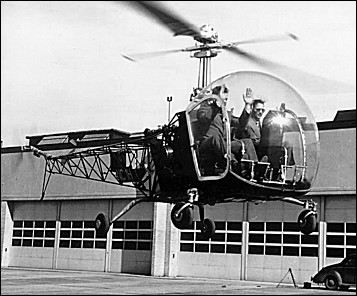
Early Bell 47 Helicopter

Was the Bell 47 used in Vietnam?

While the Bell 47 is primarily celebrated for its civilian contributions, its valor in the military domain cannot be overlooked. During the Vietnam War, this aircraft played a pivotal role in reconnaissance and medical evacuation missions, saving countless lives.

Where was the Bell 47 built?

The Bell 47 was predominantly built in Fort Worth, Texas. It’s global acceptance helped it find its way into hangers worldwide.

Civilian use of the Bell 47

The Bell 47 made its indelible mark in civilian sectors. It was instrumental in supplying helicopter emergency medical services, a staple in modern medical responses. Additionally, the aircraft’s versatility saw its application in agriculture, logging, and even live news reporting. Its reliability, combined with its pioneering design, made it a favorite among private owners, businesses, and public service agencies.

Technical description and specifications of the Bell 47 Helicopter

The Bell 47, with its distinctive design and unparalleled versatility, boasts impressive technical specifications. Below is a table outlining its primary attributes:

SpecificationDetails
CrewOne pilot
CapacityOne passenger
Length31 ft 7 in
Rotor Diameter37 ft 2 in
Powerplant1 × Lycoming TVO-435-F1A, 280 hp
Maximum Speed91 mph
Range214 miles
Service Ceiling11,000 ft

(Note: The table above offers a general overview. Specifics might vary based on the variant of the Bell 47.)

Conclusion

The Bell 47 is not just a helicopter; it is a chapter in aviation history that underlines the spirit of human innovation. The Bell 47’s legacy is etched in helicopter history. Through its diverse roles and groundbreaking design, it truly symbolizes the promise and potential of rotary-wing aircraft.


Similar Posts

  • The Boeing CH-47 Chinook: A Helicopter, A Hero, A Historic Icon

    Dive deep into the illustrious journey of the Boeing CH-47 Chinook, a true legend in the realm of aviation. This comprehensive guide takes readers on a whirlwind tour of the Chinook’s pivotal moments, from its innovative design breakthroughs to its indispensable roles in worldwide military and humanitarian operations. The article sheds light on the Chinook’s unmatched performance metrics, drawing insightful comparisons with its peers, and culminating in an exploration of its enduring legacy and impact on the fabric of aviation history. Whether you are an aviation enthusiast eager to understand technical nuances, a history buff keen on retracing the Chinook’s footprints, or someone simply fascinated by tales of human ingenuity and achievement, this article serves as your window into the world of the Boeing CH-47 Chinook. Discover the stories, the milestones, and the spirit of a helicopter that is much more than just a machine.

  • Medevac Helicopters: Flying Ambulances in Modern Emergency Response

    In this in-depth article, explore the transformative world of medevac helicopters, the life-saving fusion of medical care and aviation. Medevac helicopters stand as crucial lifelines, ensuring swift and vital medical assistance to those in urgent need, serving as aerial ambulances equipped with advanced medical amenities. Delve into the rich history and evolution of these helicopters, witnessing how they’ve adapted and modernized, incorporating cutting-edge technology and enhanced safety measures. Understand the operational aspects and distinct features that make medevac helicopters a cornerstone in emergency medical services, providing timely medical response and transport. Explore the economic ramifications, the cost-effectiveness, and the ethical and regulatory frameworks guiding their utilization. The article also sheds light on prominent providers and manufacturers, and offers a glimpse into the future, where innovations promise to refine their capabilities further. Additionally, find answers to common queries in our extensive Frequently Asked Questions section. Whether you’re an enthusiast, a professional, or simply curious, this article serves as your comprehensive guide to the multifaceted realm of medevac helicopters, providing a blend of clarity, conciseness, and engaging content.

  • |

    The Evolution of the Bell 407: Building on the Legacy of the Bell 206

    The Bell 407 helicopter seamlessly integrates innovation and legacy, taking cues from the famed Bell 206 and the military-inspired OH-58. Introduced in 1995, this aircraft harmoniously blends groundbreaking design elements with proven performance features. From its robust engine to versatile variants like the Eagle 407 and the Bell 407GX, the 407 has made a global impact, mirroring the international acclaim of its predecessor. Delve into this article to understand the advancements, the global influence, and the lasting legacy of a helicopter that’s reshaping aerial transportation.

  • Medevac Helicopters in the Medical Field

    Helicopters, synonymous with adaptability and speed, have cemented their role in various sectors, both military and civilian. One of their paramount contributions remains medevac, or medical evacuation, a service that has transformed emergency medical responses. This airborne ambulance’s ability to arrive faster, more safely, and smoother than ground-based ambulances has made it a game-changer in life-saving missions.

  • Helicopter Manufacturers Search for Speed

    Rivals Eurocopter, U.S.-based Sikorsky and other companies are testing fast prototypes, all with an eye toward redefining the helicopter’s place in the sky and expanding its market. Eurocopter’s X3 made its public debut at the 2011 Paris Air Show.

    The companies are hoping that by increasing range and boosting maximum speed to as fast as 280 miles per hour from a current high speed of 175 mph will spark increased use as emergency vehicles and as transportation for executives and workers in remote locations.