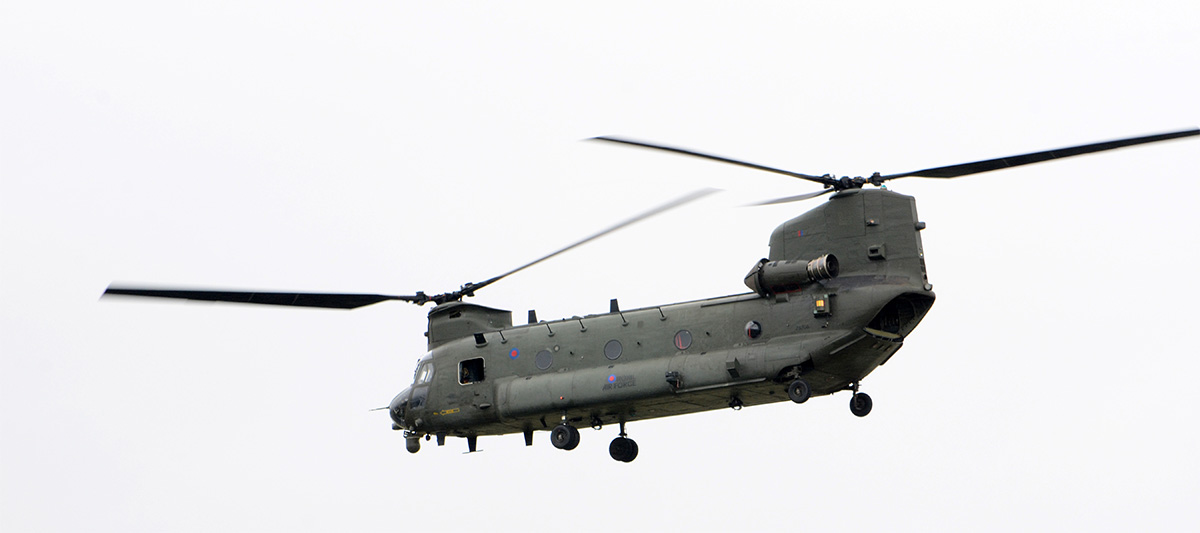
Chinook Flying Showing Multiple rotors

CH-47 Chinook Helicopter – Making a Great Helicopter Better

The Origin and Early Developments

The CH-47 Chinook Helicopter, an enlarged version of the Vertol Model 107, emerged as the preferred choice for the Army due to its larger capacity. The prototype of this Vertol’s Model 114 was first flown on September 21, 1961, and deliveries to the Army began in 1972. The CH-47A Chinook, with its sizable twin rotors and newly developed turboshaft engines, brought a new level of airlift capability to helicopter operations.

Design and Features

The Chinook features a cargo-carrying fuselage largely clear of obstructions. The Chinook’s engine and gearbox are positioned in pylons above the fuselage. A large split double door, whose lower half also functions as a ramp, allows for easy rear access for freight or small vehicles.

The basic design features seats along each side of the fuselage, accommodating 33 troops, with the capacity to carry up to 55 in emergencies. At the end of the Vietnam War, reports indicated that a Chinook lifted 147 refugees.

Subscribe to the R Two Youtube Channel.

Engine Development and Model Enhancements
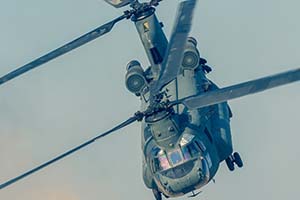
Chinook Helicopter in a Dive

Over the years, the Chinook helicopter underwent significant engine development. The CH-47A incorporated a high-powered T55 engine. Its successors, the CH-47B and CH-47C, received even more powerful engines and underwent design upgrades like redesigned rotor blades, strengthened gearbox, and increased fuel capacity.

The CH-47D saw a further power increase and additional equipment improvements, including night vision goggle compatibility and the addition of two hooks located under the fuselage for carrying multiple underslung loads. The CH-47D, capable of handling a 25,000lb load, nearly twice the Chinook’s original lift capacity, became the Army’s standard model. As a result, most of the earlier models underwent major refurbishment to meet the CH-47D standard.

Special Operations Variants and Future Developments

Several Chinooks were adapted for the Army’s Special Operations Forces. These Chinooks were given the title of MH-47. Equipped with a 29ft 5in refueling probe and a commercial Chinook variant nose for weather radar, these models feature improved communication and navigation capabilities. The MH-47 variants is typically equipped with two 6-barrel mini-guns for self-protection.

Development of an improved MH-47E commenced in the late 1980s, recognizable by the larger fuel pods mounted on each side of the lower fuselage and the ability to be air-refueled.

In 2001, the Special Operations Command planned to order the MH-47G, rebuilding MH-47Ds with superior navigation. There is also a plan to upgrade CH-47Ds to the CH-47F standard, requiring aircraft re-manufacturing. Upgrades will include more powerful engines, vibration reduction, improved avionics with digital mission management systems and a digital map.

This is the CH-47 Chinook
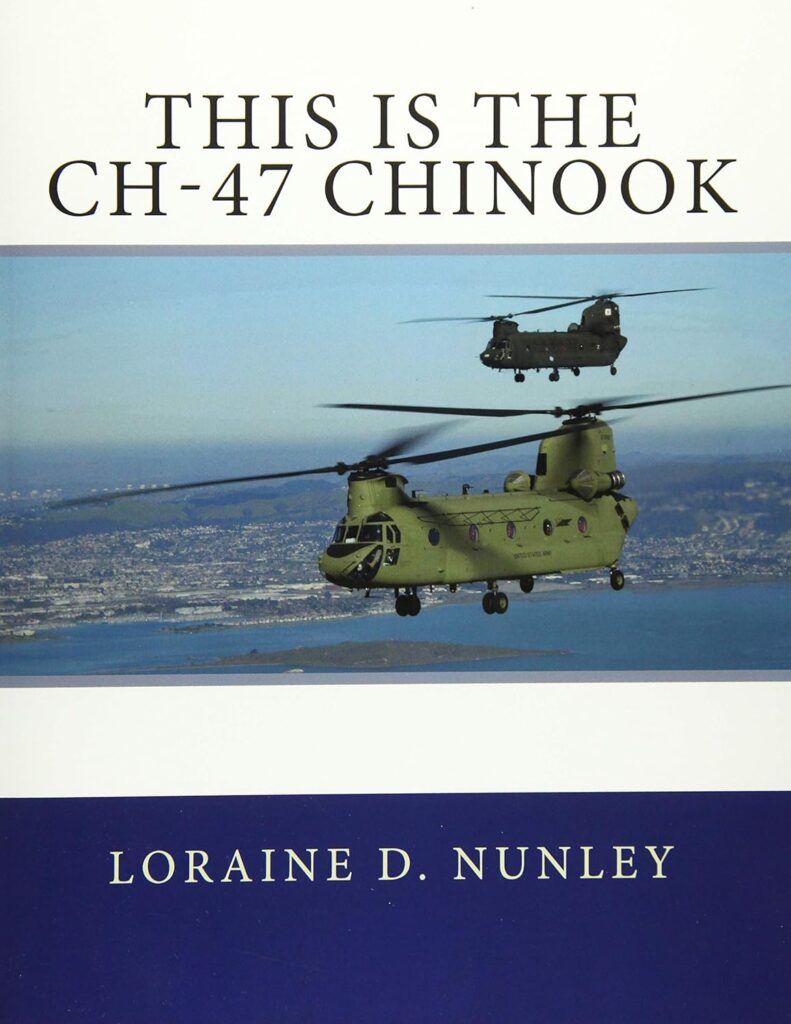
The CH-47 Chinook aircraft is one of the most reliable and efficient transport helicopters in the world. Its ability to fly fast and transport heavy loads in many different climates and wind conditions make it an invaluable part of military transport aircraft. This book is intended to introduce children to this important helicopter through striking photographs. Adults may also find themselves fascinated by the remarkable capabilities of this machine.

Chinooks in Action

Chinooks first saw combat duty in Southeast Asia in 1965 and have since been the workhorse for Army regular and special ops forces. Through numerous conflicts and rescue missions, they have proven their endurance and adaptability, becoming an indispensable part of military aviation.

Frequently Asked Questions

 When was the CH-47 Chinook Helicopter first flown?

The prototype of the CH-47 Chinook Helicopter was first flown on September 21, 1961.

What is the carrying capacity of a CH-47 Chinook?

Basic seating along the sides of the CH-47 Chinook allows for 33 troops. It can carry up to 55 in case of emergencies. Its load capacity is nearly 25,000lb.

What are the unique features of the MH-47 variant?

The MH-47 variant features a 29ft 5in refueling probe and improved communication and navigation capabilities. It also typically carries two 6-barrel mini-guns for self-protection.

What is the future development plan for the CH-47D?

The plan is to upgrade CH-47Ds to the CH-47F standard, requiring re-manufacturing with powerful engines, vibration reduction, and improved avionics.

Similar Posts

  • | |

    The Oldest Helicopters Still in Service Today

    Discover the fascinating journey of the oldest helicopters still in service today, a testament to human ingenuity and technological advancement. This detailed exploration delves into the rich history of iconic helicopters like the Sikorsky UH-1 Iroquois (Huey) and Boeing CH-47 Chinook, highlighting their remarkable longevity and enduring roles in both military and civilian sectors. From their early conceptual designs to their modern adaptations, these helicopters have evolved through continuous upgrades in avionics, engines, and structural materials.

    Our comprehensive analysis includes insights from aviation experts, comparative tables of technical specifications, and a look at future prospects and modernization programs. Learn how these helicopters have remained operational for decades, the critical missions they support, and the innovations that keep them relevant. Whether you are an aviation enthusiast, a history buff, or a professional in the field, this article offers a wealth of knowledge and intriguing insights into the resilient world of rotary-wing aircraft. Dive into the enduring legacy of these airborne workhorses and appreciate the technological marvels that keep them flying high.

  • |

    Poland gets green light to buy Apache helicopters

    WASHINGTON — The State Department has cleared a sale of 96 AH-64E Apache attack helicopters worth about $12 billion to Poland, the Defense Security Cooperation Agency announced Aug. 21.

    The decision comes after the Polish Ministry of National Defence sent a letter of request to the U.S. government nearly a year ago to buy the Boeing-made helicopters for its armed forces.

  • The Comprehensive Guide to the Mil Mi-28 Helicopter

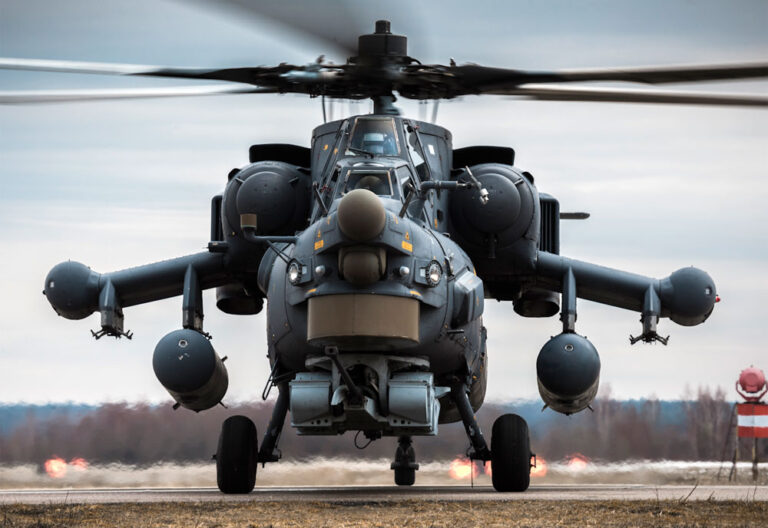
    Dive into the world of the Mil Mi-28 helicopter, an engineering marvel that stands tall in the annals of military aviation. This comprehensive guide unravels the rich tapestry of the “Night Hunter,” from its historical inception to its pivotal role on the global stage. Discover the technical intricacies that distinguish the Mi-28, the innovations that set it apart, and its comparative strengths against other iconic helicopters. Further, gain insights into its vast global footprint, from countries that deploy it as a strategic asset to the future upgrades that promise to elevate its prowess. This article is a treasure trove for military enthusiasts, researchers, and anyone intrigued by the blend of technology and strategy in the skies. Embark on a journey with the Mil Mi-28 helicopter, a testament to human ingenuity and a beacon of aerial excellence.

  • Unleashing Power: The CH-53 Sea Stallion Helicopter’s Evolution And Impact

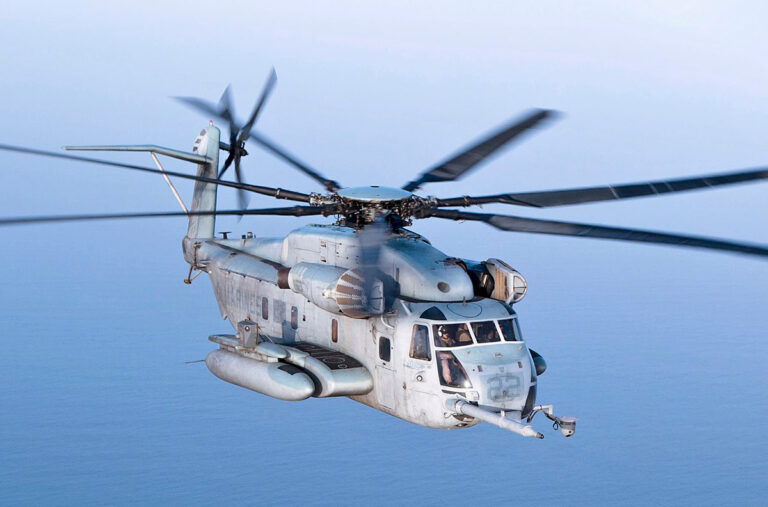
    Designed as a heavy assault transport helicopter for the Marine Corps, the initial Sea Stallion CH-53A version of the Sikorsky S-65 was basically a considerably enlarged version of the S-61, but with a conventional fuselage instead of a boat hull.  The dynamic parts – gearboxes, transmission and rotors – were based on those of the CH-54 (S-64) but with the main rotor having a titanium hub and folding blades. 

  • History of the Hughes OH-6 Cayuse Helicopter

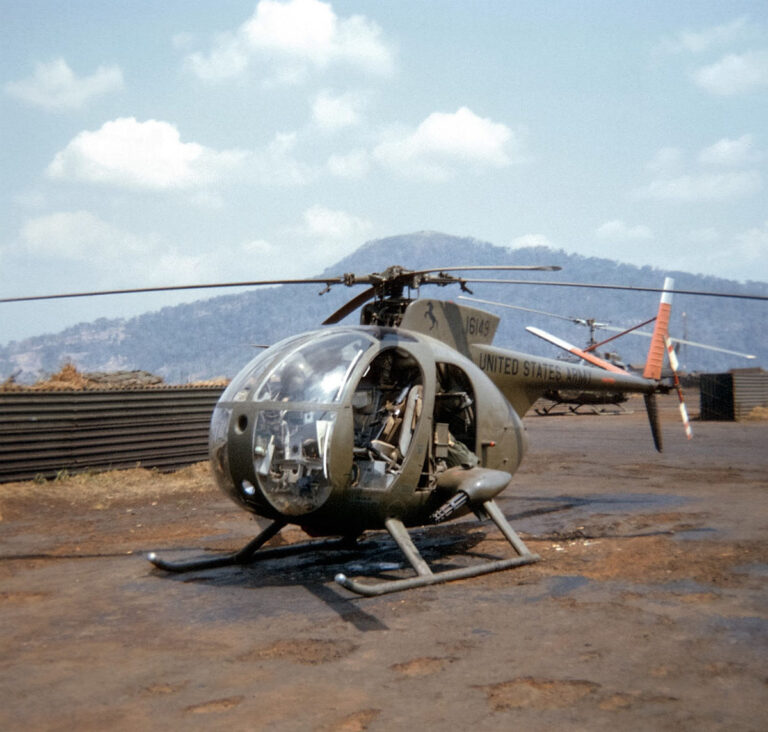
    The inception of the OH-6 Cayuse traces back to the U.S. Army LOH (Light Observation Helicopter) competition in 1963. From its initial identity as the Hughes Model 369, it contended against 12 other designs. The spotlight ultimately centered on three: Hughes’ Model 369, Fairchild-Hillier’s H23 Raven, and Bell’s early OH-58 Kiowa model.

    While Bell’s offering fell short due to its underwhelming power, the Hughes Model 369 – rebranded YOH-6A with a robust 252hp Allison T63-A-5A engine – soared during the trials at Fort Rucker, Alabama in 1963.

  • Sikorsky S-60 Helicopter – The Army’s Ultimate Tactical Transport System

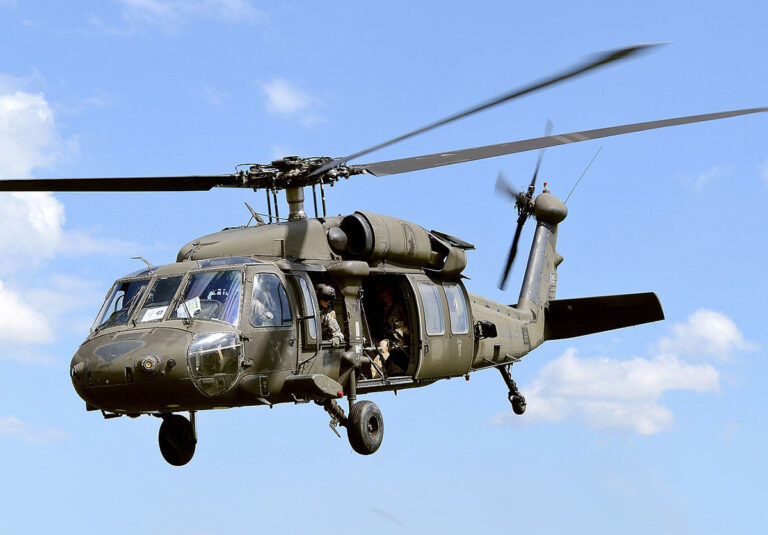
    The Sikorsky Model S-60 was proposed to meet the Army’s need for a Utility Tacticla Transport Aircraft System (UTTAS) to replace the UH-1 Iroquois.  The prototype was first flown on October 17, 1974, and the Army ordered 2,260 of the type, designated UH-60 Black Hawk, although budgetary constraints confined the order to 1,400, the first entering service in June 1979.  The Black Hawk is considerably larger than the UH-1 and initial aircraft could carry 20 troops compared with 11, plus a substantial underslung load (8,000lbs).Â