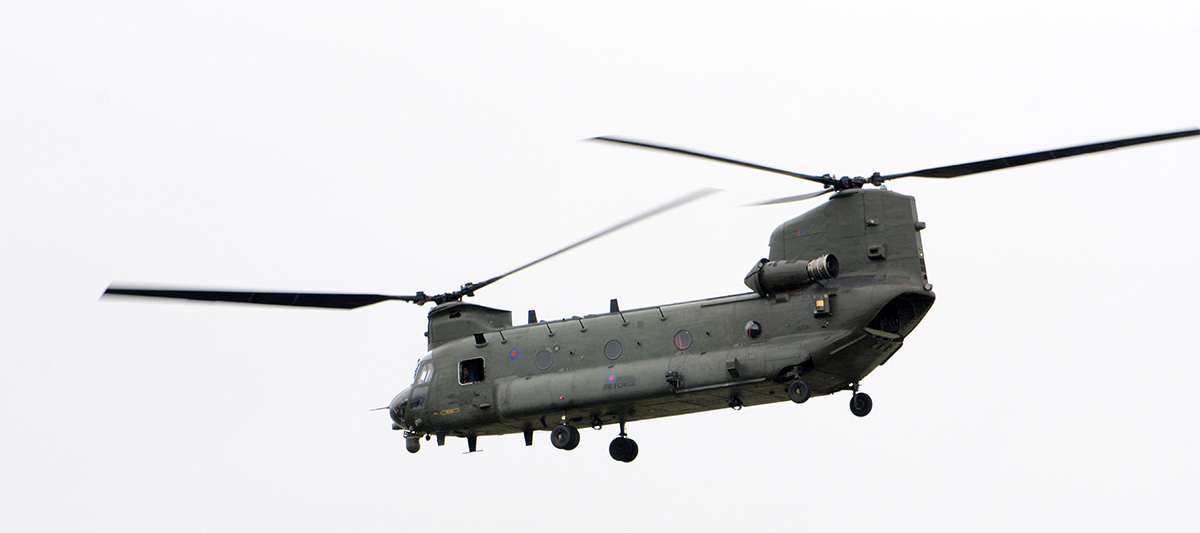
Boeing Chinook Helicopter in Flight
|

Boeing Chinook Helicopter Performance Video

This video demonstrates the multiple uses of the Chinook CH-47 Helicopter.  The Chinook may look like a lumbering giant, but this video will change your opinion of the Chinook Dual-Rotor Helicopter.  The CH-47 goes through some powerful moves and you quickly realize that even the Chinook pilots get to have some serious fun with their machines.

This is the full display by the CH47 Chinook helicopter at Farnborough International Air Show July 2010.

The Boeing CH-47 Chinook is an American twin-engine, tandem rotor heavy-lift helicopter. Its primary roles are troop movement, artillery emplacement and battlefield resupply. It has a wide loading ramp at the rear of the fuselage and three external-cargo hooks. With a top speed of 170 knots (196 mph, 315 km/h) the helicopter is faster than contemporary utility and attack helicopters of the 1960s. The CH-47 is among the heaviest lifting Western helicopters. Its name is from the Native American Chinook people.

The Chinook helicopter was designed and initially produced by Boeing Vertol in the early 1960s; it is now produced by Boeing Rotorcraft Systems. It is one of the few aircraft of that era – along with the fixed-wing Lockheed C-130 Hercules cargo aircraft – that remain in production and front-line service, with over 1,179 built to date. The helicopter has been sold to 16 nations with the U.S. Army and the Royal Air Force (see Boeing Chinook (UK variants)) its largest users.

Subscribe to RAFAEL M’s Youtube Channel!

The Final Mission of Extortion 17: Special Ops, Helicopter Support, SEAL Team Six, and the Deadliest Day of the US War in Afghanistan

Extortion 17 Helicopter Book

On August 6, 2011, a US Army CH-47D Chinook helicopter approached a landing zone in Afghanistan 40 miles southwest of Kabul. The helicopter, call sign Extortion 17, was on a mission to reinforce American and coalition special operations troops. It would never return. Insurgents fired at the Chinook, severed one of its rear rotor blades, and brought it crashing to the ground. All 38 onboard perished instantly in the single greatest moment of sacrifice for Americans in the war in Afghanistan.

Similar Posts

  • History of the AH-64 Apache Assault Helicopter

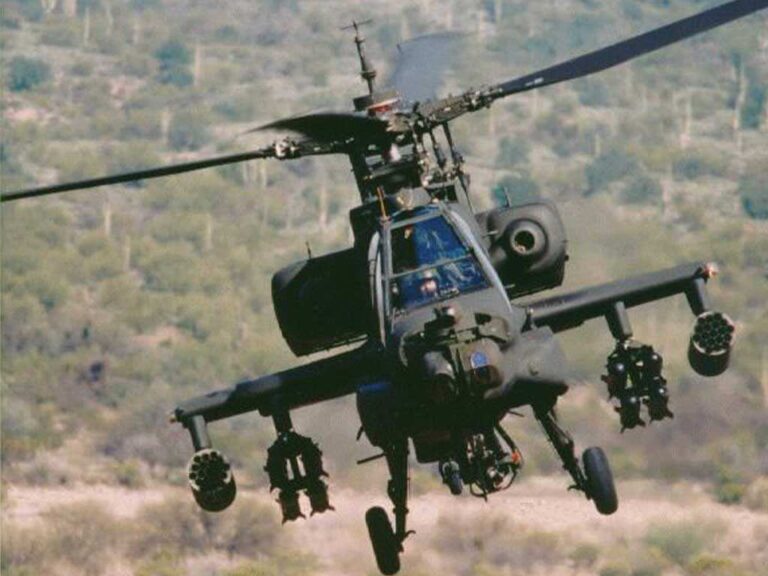
    The AH-64 Apache Helicopter was originally designed by Hughes in the 1970s to meet an Army requirement for an advanced attack helicopter.  Production was not authorized until 1982.  The first Apache helicopter deployed in 1986.  The AH-64A became the Army’s primary attack helicopter and a total of 824 were put into Army service.

    The Apache helicopter can react quickly to engage in close combat to destroy, disrupt or hold up enemy forces.

  • Eurocopter Tiger Helicopter Unveiled: Beyond the Battlefield

    Dive deep into the world of the Eurocopter Tiger Helicopter, a premier combat aircraft, renowned for its advanced capabilities and dynamic operational performance. This article unfolds the rich history and developmental journey of this cutting-edge helicopter, offering a detailed insight into its distinctive features and specifications. Users will appreciate learning about the various models and variants, as well as the diverse user nations leveraging the Tiger for their defense needs.
    The Eurocopter Tiger stands out for its economic impact and is pivotal in shaping aerial combat strategies, excelling in safety and reliability. Explore upcoming upgrades and future models that showcase the potential of this helicopter in evolving combat scenarios. Learn about its future developments and the significant role it is poised to play in next-generation warfare. Whether you’re an aviation enthusiast, a professional in the field, or simply curious, this comprehensive guide provides a wealth of information, engaging insights, and answers to frequently asked questions about the Eurocopter Tiger Helicopter. Don’t miss out on discovering how this remarkable aircraft is redefining the boundaries of aerial combat!

  • |

    The Huey Helicopter’s Role in the Final Chapters of Vietnam

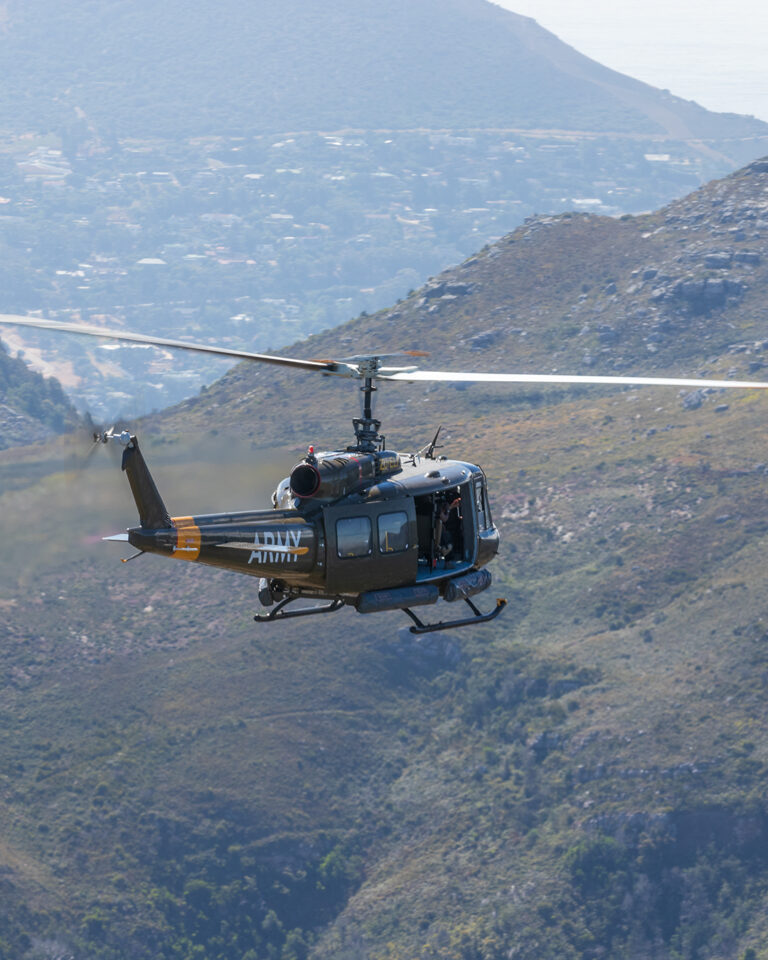
    As the Vietnam War neared its end, the Bell UH-1 “Huey” played an instrumental role in shaping its final chapters. From aiding the US’s drawdown strategy to facilitating desperate evacuations during Saigon’s fall, the Huey was at the conflict’s heart. Yet, its legacy extends beyond combat. Post-war, even as a divided nation sought to heal, the Huey found new life in reconstruction and unification efforts. Dive into the intertwined destinies of a nation and an aircraft and explore how the Huey transformed modern warfare.

  • |

    The History of the Bell 47 Helicopter

    The Bell 47 Helicopter stands as a monumental icon in aviation history. Originating in the mid-20th century, it pioneered roles in both civilian sectors and combat zones. From its crucial interventions in the Vietnam War to its transformative impact on emergency medical services and agricultural tasks, the Bell 47’s versatility and design have left an indelible mark. Journey with us as we explore the rich tapestry of its legacy, innovations, and enduring significance in the world of rotary-wing aircraft.

  • Unleashing Power: The CH-53 Sea Stallion Helicopter’s Evolution And Impact

    Designed as a heavy assault transport helicopter for the Marine Corps, the initial Sea Stallion CH-53A version of the Sikorsky S-65 was basically a considerably enlarged version of the S-61, but with a conventional fuselage instead of a boat hull.  The dynamic parts – gearboxes, transmission and rotors – were based on those of the CH-54 (S-64) but with the main rotor having a titanium hub and folding blades. 

  • History of the Hughes OH-6 Cayuse Helicopter

    The inception of the OH-6 Cayuse traces back to the U.S. Army LOH (Light Observation Helicopter) competition in 1963. From its initial identity as the Hughes Model 369, it contended against 12 other designs. The spotlight ultimately centered on three: Hughes’ Model 369, Fairchild-Hillier’s H23 Raven, and Bell’s early OH-58 Kiowa model.

    While Bell’s offering fell short due to its underwhelming power, the Hughes Model 369 – rebranded YOH-6A with a robust 252hp Allison T63-A-5A engine – soared during the trials at Fort Rucker, Alabama in 1963.