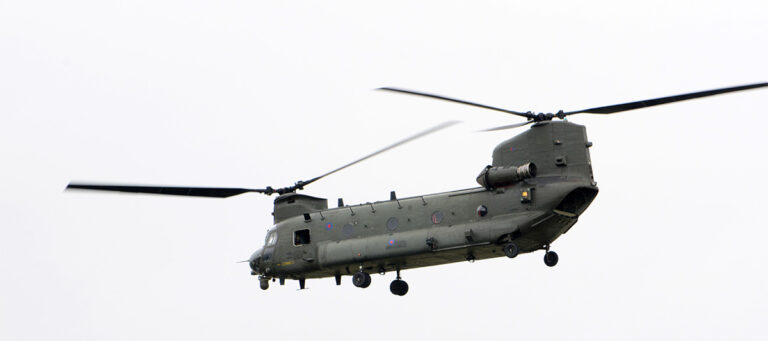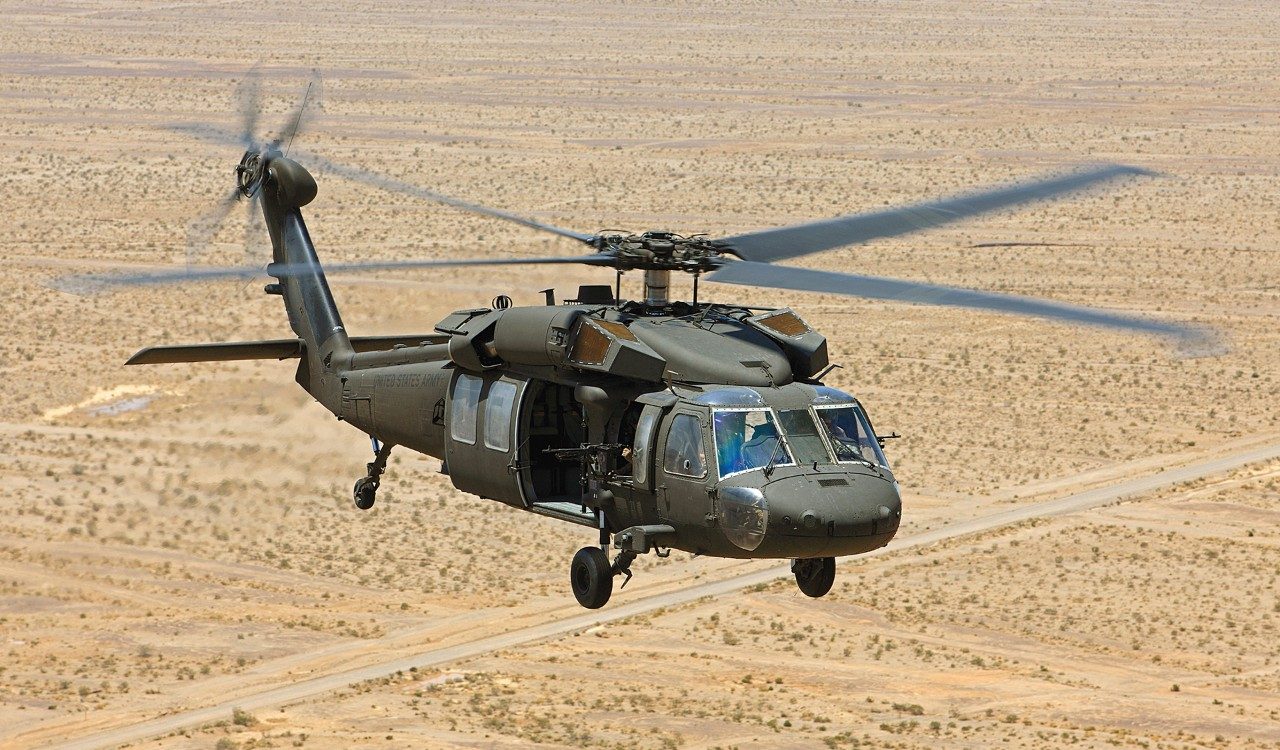
Sikorsky UH-60 Black Hawk Helicopter

Masterpiece of Military Aviation: The Sikorsky UH-60 Black Hawk Helicopter

Welcome to a comprehensive journey of understanding the Sikorsky UH-60 Black Hawk helicopter. In this article, we will explore its inception, its various models, and the distinct roles it plays in the military. Prepare to unlock the rich history and extensive capabilities of this groundbreaking aircraft.

A Tactical Revolution: The UH-60 Black Hawk

The genesis of the UH-60 Black Hawk began with the Sikorsky Model S-60, engineered to replace the UH-1 Iroquois. The Army’s demand for an advanced Utility Tactical Transport Aircraft System (UTTAS) spurred its creation. The inaugural flight took place on October 17, 1974. The Army ordered a whopping 2,260 Black Hawks. However, budget restrictions brought the order down to 1,400 units, with the first one becoming operational in June 1979.

Compared to the UH-1, the Black Hawk presents a larger build, accommodating twenty troops compared to eleven and bearing an underslung load of 8,000lbs. The UH-60 is also highly portable. A C-130 Hercules can transport a single UH-60, while a C-141 StarLifter fits two, and a colossal C-5 Galaxy can carry six.

An Illustrated History of Military Helicopters

An Illustrated History of Military Helicopters

A complete history of Army and Navy helicopters from the first visionaries to unmanned aircraft systems. This book, with over 200 helicopter photographs documents every generation of rotorcraft from early prototypes to the specialist helicopters of today.

Amazing text. As a Veteran helicopter mechanic I am passionate about all birds and their histories. Highly recommend this book. It sits firmly on my coffee table to spread the allure to friends and visitors alike. – John J.

Evolution of the Black Hawk

The initial Sikorsky UH-60A model gave way to the more robust UH-60L, which boasts stronger engines and a reinforced underslung hook. The Medevac variants of both models can host six stretchers. The military upgraded around 40 UH-60Ls to EH-60As to enhance battlefield electronic warfare capabilities. Another thirty received modifications to become MH-60As for special operations. The first flight of the UH-60M prototype took place in September 2003 and is expected to take over the role of the UH-60L.

Pave Hawk and Special Operations Forces Black Hawk

The UH-60A was also the blueprint for the Air Force’s HH-60G Pave Hawk, used for Combat Search and Rescue (CSAR). A C-130 Hercules can refuel this model, and operators can equip it with pintle-mounted machine guns for hostile terrain. Drawing inspiration from the Special Operations Forces MH-60K Black Hawk, the MH-60L underwent a substantial upgrade with additional weaponry.

Presidential Flight and Marine Corps Involvement

The Presidential Flight took possession of the first of nine VH-60N White Hawks in November 1988, operated by the Marine Corps. However, the Marine Corps declined to accept the proposed H-60E.

Navy Involvement: Seahawk to Knight Hawk

The S-60B became the SH-60B Seahawk after winning the Navy LAMPS MK.III competition in 1977. Sporting automatic tail and rotor folding, it serves Anti-Submarine Warfare (ASW) and Anti-Ship Missile Defense (ASMD) roles. The SH-60F Ocean Hawk succeeded the SH-3D Sea King. Moreover, with its larger cabin volume, the MH-60S Knight Hawk is poised to take over the Fleet Combat Support Aircraft role from the HH-46s.

The journey of the Sikorsky UH-60 Black Hawk is a testament to the evolution of military aircraft. From its original design to its latest incarnation, the Black Hawk remains an indomitable symbol of strength, versatility, and innovative technology.

Similar Posts

  • |

    Helicopter Dustoffs in Vietnam

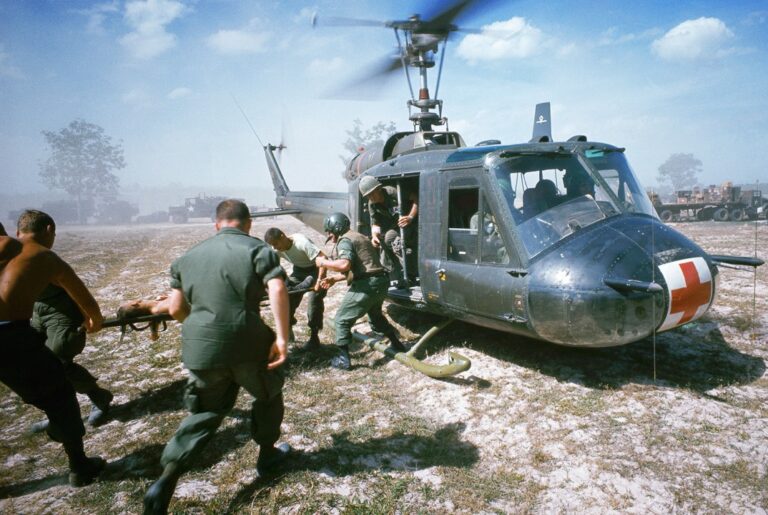
    Medevac helicopters revolutionized how wounded soldiers were treated in battle. 29% of all wounded US Soldiers died during World War II. This number was reduced to 26% during the Korean War due to advances in medical technology and the use of medevac helicopters like the Bell 47. This number was further reduced to 19% during the Vietnam War. To put the percentages in to perspective, medevac helicopters in Vietnam transported 400,000 wounded soldiers compared to 17,700 during the Korean War.

  • Vietnam Becomes the Helicopter War

    In 1968, US Troops numbered over 535,000 and the Huey Helicopter was a familiar sight.  The helicopter proved its worth in the early months of 1968 when the Tet Offensive started in Vietnam Cities.  During the offensive, armed UH-1 gunships would fly on the flanks of the combat zone while UH-1 slicks delivered troops into a landing zone.  If the LZ was under fire from Viet Cong positions, the gunships would try to keep the Viet Cong under cover.  It was during this time that the AH-1G HueyCobra was introduced to the battlefield.

  • 10 Facts about the Boeing CH-47 Chinook

    The Boeing CH-47 Chinook helicopter, a cornerstone of global military operations, boasts an impressive history and an array of features that underscore its significance. First flown in 1961, the Chinook has served in countless conflicts, showcasing unparalleled lift capabilities and adaptability. Its tandem rotor design eliminates the need for a tail rotor, optimizing lift and enabling it to carry substantial payloads, including troops, vehicles, and supplies.

  • Medevac Helicopters in the Vietnam War

    In April 1962, the 57th Medical Detachment brought their 5 Bell UH-1 helicopters with them to offer medevac to troops on the ground. The “Huey” proved invaluable as an air asset and soon gained almost legendary status. The first medevac in Vietnam was on the 12th of May 1962 when an ARVN advisor was injured in action. After that evacuation, the helicopters were in almost constant use. The term “Dust off” was first used in Vietnam to signify the dust the helicopter threw up when arriving to medevac casualties. It is a moniker that stuck.

  • The Boeing CH-47 Chinook: A Helicopter, A Hero, A Historic Icon

    Dive deep into the illustrious journey of the Boeing CH-47 Chinook, a true legend in the realm of aviation. This comprehensive guide takes readers on a whirlwind tour of the Chinook’s pivotal moments, from its innovative design breakthroughs to its indispensable roles in worldwide military and humanitarian operations. The article sheds light on the Chinook’s unmatched performance metrics, drawing insightful comparisons with its peers, and culminating in an exploration of its enduring legacy and impact on the fabric of aviation history. Whether you are an aviation enthusiast eager to understand technical nuances, a history buff keen on retracing the Chinook’s footprints, or someone simply fascinated by tales of human ingenuity and achievement, this article serves as your window into the world of the Boeing CH-47 Chinook. Discover the stories, the milestones, and the spirit of a helicopter that is much more than just a machine.

  • CH-47 Chinook Helicopter – Making a Great Helicopter Better

    The CH-47 Chinook Helicopter was an enlarged development of the Vertol Model 107, designated Model 114, which the Army preferred because of its greater capacity.  The prototype was first flown on September 21, 1961, and deliveries to the Army began in 1972 as the CH-47A Chinook.  With large twin rotors powered by relatively new turboshaft engines, plus a cavernous fuselage, the CH-47 offered helicopter airlift capability not previously available.