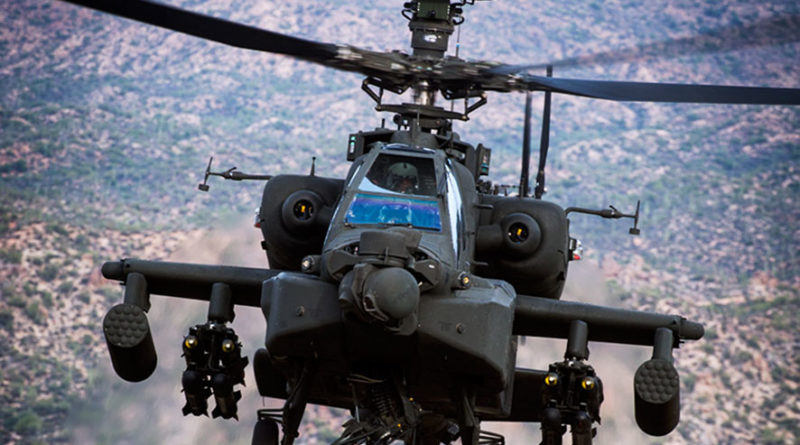
Boeing Apache Helicopter in Flight

History of the Boeing AH-64 Apache Helicopter

The Boeing AH-64 Apache Helicopter is a hallmark in the history of military aviation. Born out of a need for an advanced attack helicopter, the Apache has proven itself repeatedly. This article explores the history, features, deployment, and evolution of this remarkable helicopter.

Early Development

In the 1970s, Hughes originally designed the AH-64 Apache to meet an Army requirement. Yet, production only began in 1982. Deployment came in 1986, and 824 AH-64As became the Army’s primary attack helicopter.

Weapons and Transportation

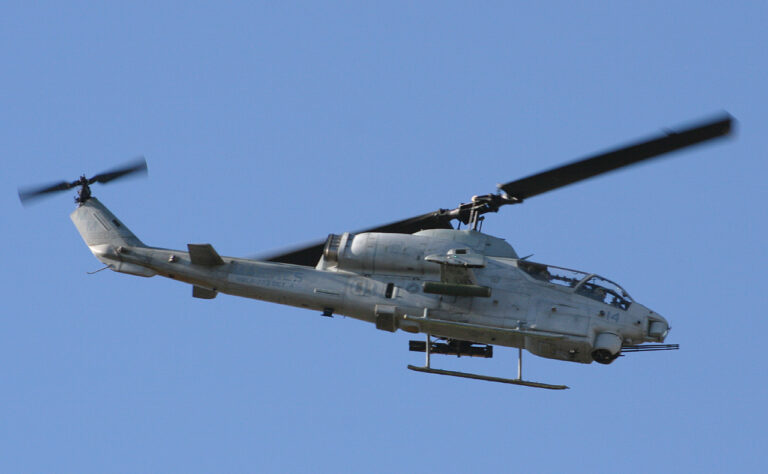
The Apache’s quick reaction in close combat sets it apart. Equipped with the AGM-114A Hellfire anti-armor laser-guided missile, it can carry sixteen of these. Additionally, the Apache wields unguided 2.75-inch rockets and a 30mm M230 Chain Gun. Transportable in the C-5, C-141, and C-17 airplanes, it is still highly mobile.

An Illustrated History of Military Helicopters

An Illustrated History of Military Helicopters

A complete history of Army and Navy helicopters from the first visionaries to unmanned aircraft systems. This book, with over 200 helicopter photographs documents every generation of rotorcraft from early prototypes to the specialist helicopters of today.

Amazing text. As a Veteran helicopter mechanic I am passionate about all birds and their histories. Highly recommend this book. It sits firmly on my coffee table to spread the allure to friends and visitors alike. – John J.

Performance in Operation Desert Storm

In 1991, the Apache deployed extensively during Operation Desert Storm. Critics were proven wrong about its low performance. Achieving a readiness rate of 90%, it earned the nickname “Black Death” from the Iraqis. By war’s end, the Apache destroyed over five hundred tanks and hundreds of other vehicles.

Other Operations and AH-64D Longbow Apache
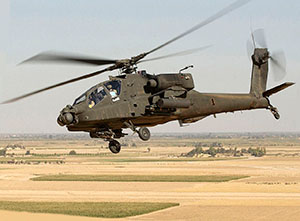
Boeing AH-64 Longbow Assault Helicopter

Besides Desert Storm, the Apache also played roles in the peace efforts in Yugoslavia and Bosnia, and the second Gulf War. A significant improvement came with the AH-64D Longbow Apache, featuring a millimeter-wave fire control radar and other enhancements. This model proved 400% more lethal and 720% more survivable than its predecessor.

From Boeing: Production and Features

Between 1984 and 1997, Boeing produced 937 AH-64As for various countries. Its high-performance engines, laser and infrared systems, and arsenal of weapons made it combat-proven.

Apache Longbow Enhancements

The radar-equipped AH-64D Apache Longbow brought further improvements. Its longer-range weapons accuracy and all-weather/night fighting capabilities added new dimensions. The integrated sensors, networking, and digital communications ensured real-time combat management and digital transmission of vital information.

Conclusion

The AH-64 Apache helicopter has evolved since its start through regular technology insertions. It continues to meet the needs of the warfighter today and promises to remain a crucial asset in the future.

Similar Posts

  • Army Helicopter Pilots Are Specially Trained

    Army helicopter pilots are specially trained for combat missions and flying in challenging conditions. Becoming an army helicopter pilot must be one of the most exciting careers there is. You could be ferrying troops or ammunition in a Chinook helicopter, scouting in a Kiowa, working special operations in a Black Hawk helicopter, or controlling the…

  • The Boeing CH-47 Chinook: A Helicopter, A Hero, A Historic Icon

    Dive deep into the illustrious journey of the Boeing CH-47 Chinook, a true legend in the realm of aviation. This comprehensive guide takes readers on a whirlwind tour of the Chinook’s pivotal moments, from its innovative design breakthroughs to its indispensable roles in worldwide military and humanitarian operations. The article sheds light on the Chinook’s unmatched performance metrics, drawing insightful comparisons with its peers, and culminating in an exploration of its enduring legacy and impact on the fabric of aviation history. Whether you are an aviation enthusiast eager to understand technical nuances, a history buff keen on retracing the Chinook’s footprints, or someone simply fascinated by tales of human ingenuity and achievement, this article serves as your window into the world of the Boeing CH-47 Chinook. Discover the stories, the milestones, and the spirit of a helicopter that is much more than just a machine.

  • Korean War and the Medevac Helicopter

    The development of helicopters during and after the Second World War proved the value and utility of rotary wing aircraft in combat situations. So much so that the Army, Navy and Air Force all set up their own helicopter development units.

    This enabled a shift in how critical care was delivered in combat. During previous conflicts, medical stations had to be as close to the front line as possible to shorten the path to care. This led to obvious risks and compromises in both treatment and conditions.  The advent of medevac helicopter meant that field hospitals could be set up in central locations and have patients delivered to them. That meant better care, better conditions and the ability to recover after operations before being evacuated. That alone saved hundreds of lives.

  • |

    Hueys in Vietnam: The Ascendancy of Air Cavalry

    The Vietnam War era was marked by countless innovations, but none stood out quite like the Bell UH-1 “Huey” helicopter. As the backbone of the 1st Cavalry Division (Airmobile) and other military branches, the Huey shifted military tactics from traditional ground movements to agile aerial operations. Beyond its tactical agility, it came armed with formidable firepower, redefining aerial warfare. This article delves into the Huey’s meteoric rise, its game-changing presence in battles like Ia Drang Valley, and its global military adoption, painting a vivid picture of a machine that changed the course of history.

  • Kamov Ka-52 Helicopter: The Alligator’s Legacy and Modern Evolution

    The Kamov Ka-52 helicopter, commonly dubbed the ‘Alligator’, is a true marvel of aviation engineering. Renowned for its unique co-axial rotor design, this aircraft stands out not just for its distinctive silhouette but also for its impressive operational capabilities. Our comprehensive article delves into the Alligator’s journey from its conceptual design to its formidable presence on the modern battlefield. We explore its technological advancements, ensuring it remains at the forefront of aerial combat. The Kamov Ka-52’s operational history is a testament to its resilience, with a history that highlights both its might and adaptability. Additionally, with continuous modernization efforts, this helicopter is poised to meet the demands of future warfare. A significant focus is also laid on its global reach, highlighting its current operators and potential export avenues. The article concludes with a reflective look at the Alligator’s enduring legacy and its promising future in the realm of military aviation. Join us in this deep dive into the world of the Kamov Ka-52 and discover why it is a beacon of innovation and excellence.