Bell UH-1 Huey Helicopter
|

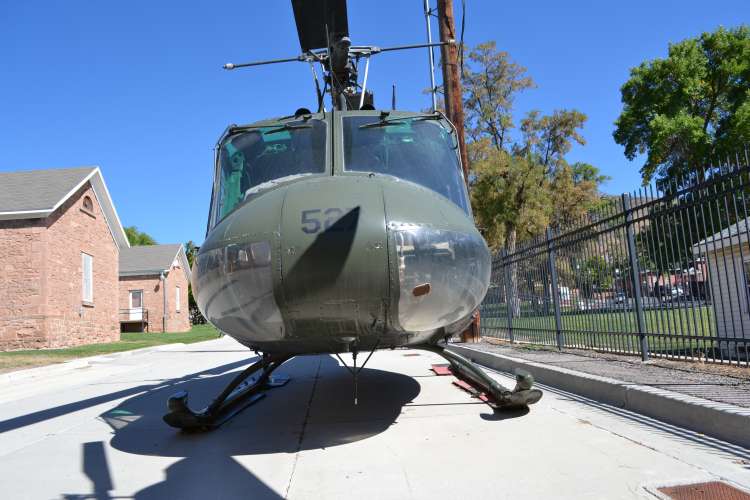
The Bell UH-1 Huey Helicopter

The Development of the Bell Huey Helicopter

In 1952 the US Army specified a requirement for new helicopter to serve as a medical evacuation, helicopter trainer, troop transport and general utility helicopter. Of the twenty companies that submitted designs, Bell Helicopter won the bid in late 1953 to build the first 3 prototypes based on their Model 204 design. The first flight of the XH-40 was October 20th, 1956 at Fort Worth, Texas and Bell was commissioned to build the first 100 HU-1A helicopters in March 1960, officially named Iroquois. While its official name is rarely used, the helicopter was nicknamed the Huey and the name stuck even after the US Army changed its designation to UH-1 “Huey” Helicopter.
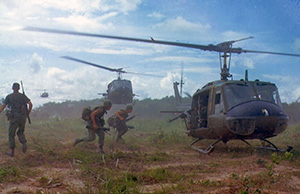
Bell Huey Helicopter in flight Soldiers exiting UH1 Huey Helicopter in Vietnam War
Bell Huey Helicopter in flight Soldiers evacuating on a UH1 Huey Helicopter in Vietnam War

Development started on the Huey Helicopter in 1960 to correct problems in the armed version of the UH-1B. Improvements included a more powerful T53-L-11 1,100 shp (820 kW) turbine engine, a new rotor system for higher airspeed and better maneuverability, longer main blades, longer tail boom, a stronger vertical fin, larger synchronized elevators and its oversized air cleaner behind the main shaft. Production of the UH-1C started in June 1966. Made famous during the Vietnam conflict, the Huey was the first helicopter gunship that achieved widespread combat use, while its main role was a troop transport. Modern versions of the Huey are expected to remain in US military service through 2015.

The Huey in Vietnam: Bell’s UH-1 at War
The Huey in Vietnam

Few implements of war are as representative of the US presence in Vietnam as the Bell Huey UH-1-series helicopters. Whether serving in the role of troop transport for airborne assault, supply transports, aerial gunships, or medical evacuation, the Huey was seemingly everywhere. The versatile aircraft, officially the “Iroquois,” was affectionately known to all as the “Huey,” a name derived from its early model designation of HU-1A. The Huey, later re-designated UH-1, was a mainstay during America’s presence in Vietnam, and 11 Huey crewmen earned the Medal of Honor.

Bell’s “Huey” Helicopter, officially known as the Model 204, formed the basis for one of the most successful series of helicopters ever built.  Flown for the first time in October 1956, it was designated the XH-40, then HU-1 by the US Army (who called it the Huey), before a designation change to the HU-1A Iroquois.  The HU-1B introduced a more powerful engine and the HU-1C had a new rotor system.  Later still the HU- designation was changed to UH-.

The turbine engine was one of the keys to the helicopter’s success. Mounted on the cabin roof just behind the gearbox, it left the cabin unencumbered and provided the performance required by the US Army.  The engine was upgraded to a 1100HP engine that became standard.  The larger engine allowed for the to be armed with rocket pods and machine guns carried on the cabin’s sides.

The UH-1C, which flew in 1965, used a new rotor system with ‘door hinges’ and wider blades.  This provided more lift, enabling the fuel load to be increased and improving the machine’s maneuverability and speed.  Variants of the UH-1C were used by the US Air Force, Navy and Marine Corps in the training, rescue and assault roles.

Bell UH-1C “Huey” Helicopter

 
Type:Single-engine multi-role utility helicopter
Poweplant:one 1100-hp Lycoming T53 turboshaft engine
Maximum Speed:148mph (238 km/h) at sea level
Initial Climb Rate:1400 fpm (427 m/min)
Range:381 miles (515 km) with auxiliary fuel
Service Ceiling:11,500ft (3505 m)
Weights:5060 lbs (2300 kg) empty; Maximum Takeoff 9480 lbs (4309 kg)
Dimensions:Rotor Diameter:  44ft (13.41 m) Length:   42ft 7in (12.98 m) Height:  12ft 7in (3.84 m) Rotor Disc Area: 1520 sq ft (141.26 m2)

Similar Posts

  • |

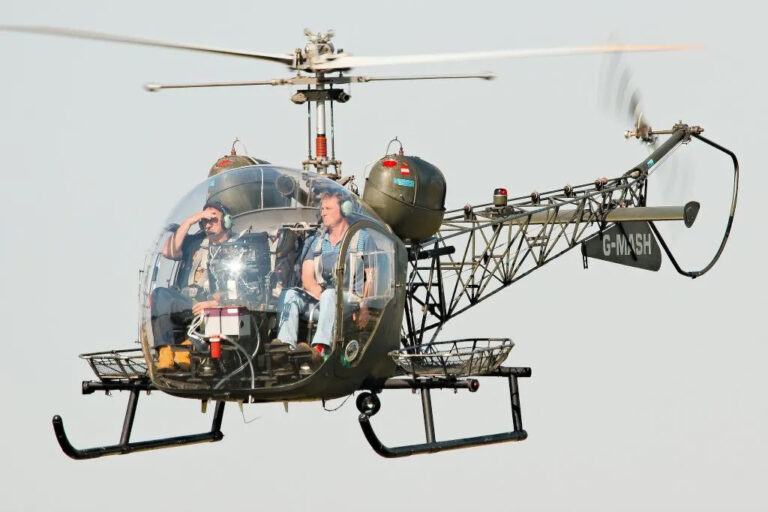
    The History of the Bell 47 Helicopter

    The Bell 47 Helicopter stands as a monumental icon in aviation history. Originating in the mid-20th century, it pioneered roles in both civilian sectors and combat zones. From its crucial interventions in the Vietnam War to its transformative impact on emergency medical services and agricultural tasks, the Bell 47’s versatility and design have left an indelible mark. Journey with us as we explore the rich tapestry of its legacy, innovations, and enduring significance in the world of rotary-wing aircraft.

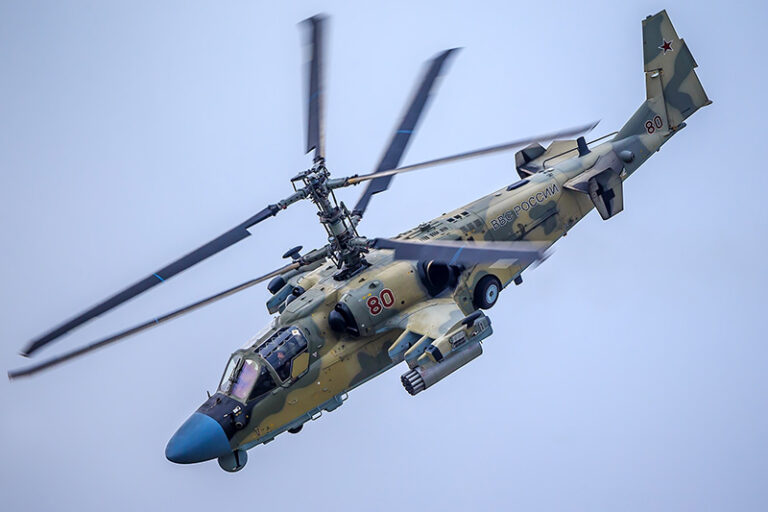
  • Kamov Ka-52 Helicopter: The Alligator’s Legacy and Modern Evolution

    The Kamov Ka-52 helicopter, commonly dubbed the ‘Alligator’, is a true marvel of aviation engineering. Renowned for its unique co-axial rotor design, this aircraft stands out not just for its distinctive silhouette but also for its impressive operational capabilities. Our comprehensive article delves into the Alligator’s journey from its conceptual design to its formidable presence on the modern battlefield. We explore its technological advancements, ensuring it remains at the forefront of aerial combat. The Kamov Ka-52’s operational history is a testament to its resilience, with a history that highlights both its might and adaptability. Additionally, with continuous modernization efforts, this helicopter is poised to meet the demands of future warfare. A significant focus is also laid on its global reach, highlighting its current operators and potential export avenues. The article concludes with a reflective look at the Alligator’s enduring legacy and its promising future in the realm of military aviation. Join us in this deep dive into the world of the Kamov Ka-52 and discover why it is a beacon of innovation and excellence.

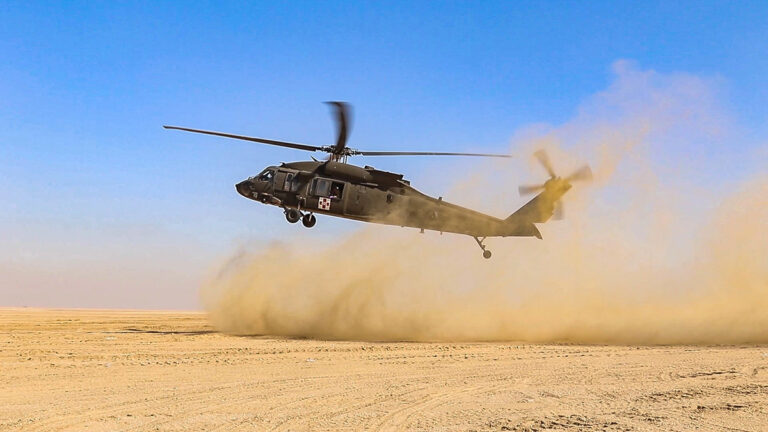
  • Medevac Helicopters in the Middle East

    Helicopters have proven themselves time and again in every scenario they have been exposed to. One of the areas they have particular excelled at is medevac and casevac.  Helicopters can and will go where other aircraft cannot and where ambulances can’t reach to rescue the wounded. They provide fast, smooth transportation of casualties to field hospitals many miles from the front lines and offer the ability to begin critical care as soon as they enter the airframe.

    During the two Iraq wars and while in Afghanistan, helicopters have continued their service to troops on the front lines. Soldiers and commanders depend on them, they regard them as essential and combat operations are not planned unless medevac choppers are available if needed. Such is the importance place on them in modern warfare.

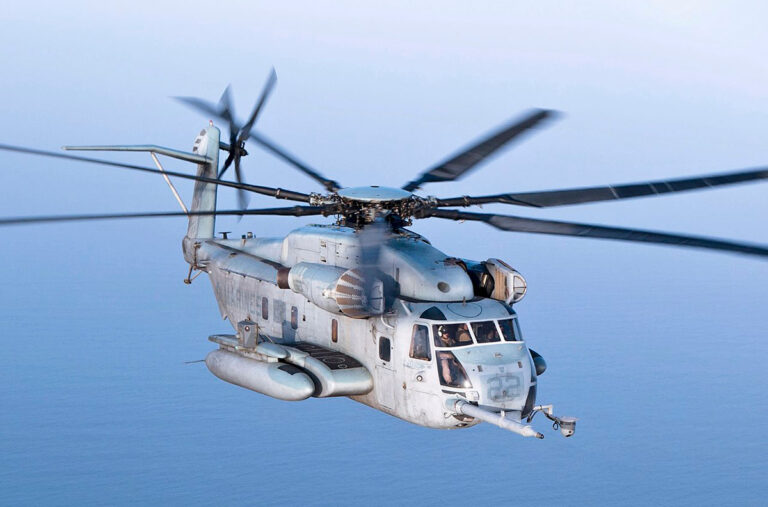
  • Unleashing Power: The CH-53 Sea Stallion Helicopter’s Evolution And Impact

    Designed as a heavy assault transport helicopter for the Marine Corps, the initial Sea Stallion CH-53A version of the Sikorsky S-65 was basically a considerably enlarged version of the S-61, but with a conventional fuselage instead of a boat hull.  The dynamic parts – gearboxes, transmission and rotors – were based on those of the CH-54 (S-64) but with the main rotor having a titanium hub and folding blades. 

  • |

    Poland gets green light to buy Apache helicopters

    WASHINGTON — The State Department has cleared a sale of 96 AH-64E Apache attack helicopters worth about $12 billion to Poland, the Defense Security Cooperation Agency announced Aug. 21.

    The decision comes after the Polish Ministry of National Defence sent a letter of request to the U.S. government nearly a year ago to buy the Boeing-made helicopters for its armed forces.

  • The Boeing CH-47 Chinook: A Helicopter, A Hero, A Historic Icon

    Dive deep into the illustrious journey of the Boeing CH-47 Chinook, a true legend in the realm of aviation. This comprehensive guide takes readers on a whirlwind tour of the Chinook’s pivotal moments, from its innovative design breakthroughs to its indispensable roles in worldwide military and humanitarian operations. The article sheds light on the Chinook’s unmatched performance metrics, drawing insightful comparisons with its peers, and culminating in an exploration of its enduring legacy and impact on the fabric of aviation history. Whether you are an aviation enthusiast eager to understand technical nuances, a history buff keen on retracing the Chinook’s footprints, or someone simply fascinated by tales of human ingenuity and achievement, this article serves as your window into the world of the Boeing CH-47 Chinook. Discover the stories, the milestones, and the spirit of a helicopter that is much more than just a machine.