Medevac Helicopters in the Vietnam War
Helicopters played a critical role in the Vietnam War. Not only was the terrain arduous for land transport, but it was also inhospitable for troops. The sheer distances involved made going anywhere by land a long and arduous process. The ever-shifting battle lines also made life interesting for all involved.
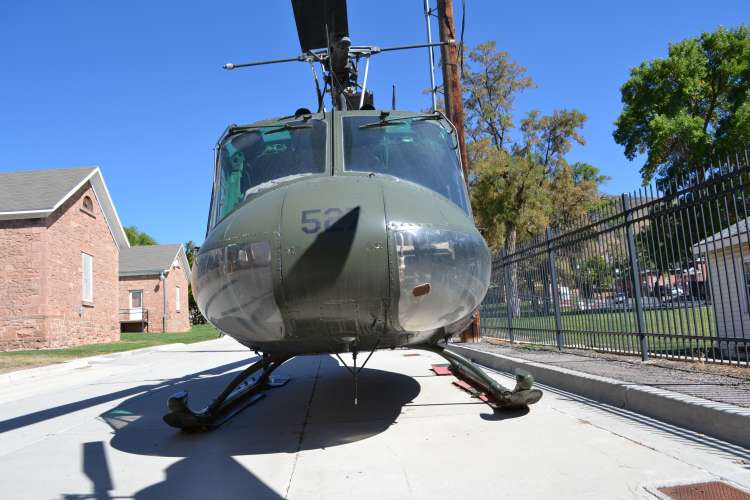
In April 1962, the 57th Medical Detachment brought their 5 Bell UH-1 helicopters with them to offer medevac to troops on the ground. The “Huey” proved invaluable as an air asset and soon gained almost legendary status. The first medevac in Vietnam was on the 12th of May 1962 when an ARVN advisor was injured in action. After that evacuation, the helicopters were in almost constant use. The term “Dust off” was first used in Vietnam to signify the dust the helicopter threw up when arriving to medevac casualties. It is a moniker that stuck.
The advantage with the Bell UH-1 over helicopters used in Korea was size and protection. A Huey could carry three stretchers and an orderly inside the cabin. This meant the first steps of critical care could be delivered right away and the patients could be stabilized during the flight. This led to a reduction in the mortality rate of patients who arrived at a field hospital, from 4 percent on World War 2 down to 1 percent during the Vietnam War.
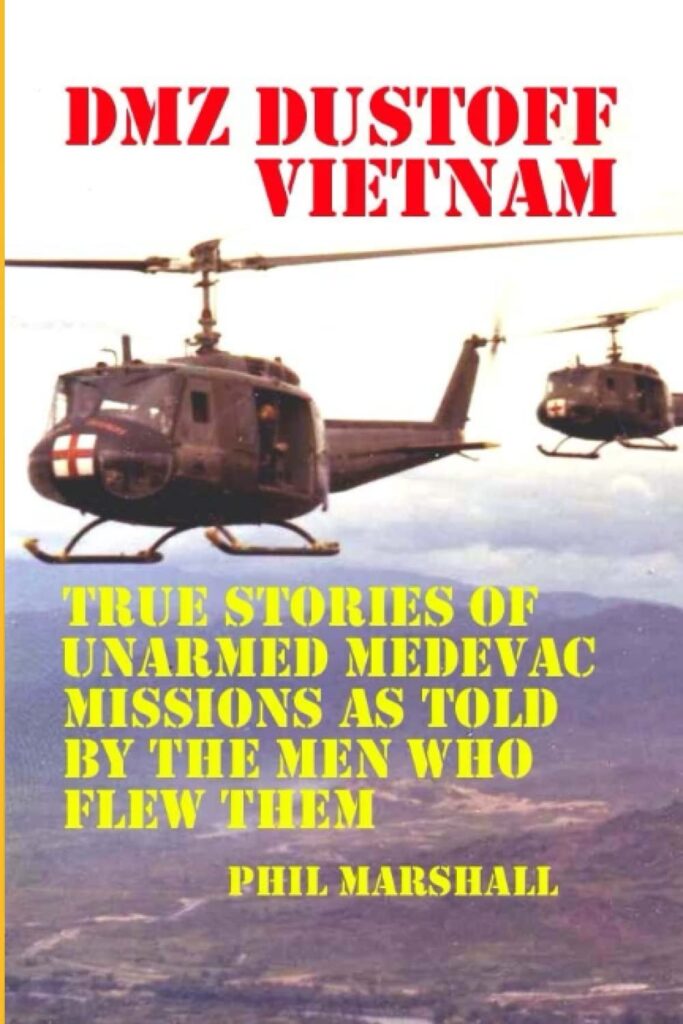
DMZ DUSTOFF VIETNAM: True Stories of Unarmed Medevac Missions As Told By The Men Who Flew Them
Grabbing the hand-held radio and transmitting on Guard, Halvorson alerted the tower to their situation. “This is Dustoff 7-oh-7 on guard, north of Quant Tri about 20 miles out. We have multiple wounded on board, no idea of their condition, no hydralics, and no instruments. We need a straight in. Clear everything, I need to be first in line”. It was about this this time that Gary noticed one of the few instruments still working was the engine temperature gauge, “And it was running pretty hot.”
The development of the Personnel Rescue Hoist further added to the Huey’s utility. One of the main problems with operating in Vietnam was finding a suitable landing zone. The addition of the rescue hoist allowed medevac pilots to hover above the ground and still collect casualties. By 1966, these were in operation across the combat zone and further reduced the time it took a casualty to receive care. The co-pilot or crew chief could lower and control the hoist while ground troops or a medical orderly would load the casualty onto the stretcher attached. The hoist would be raised, and the casualty could be brought into the cabin while the helicopter transitioned to flight.
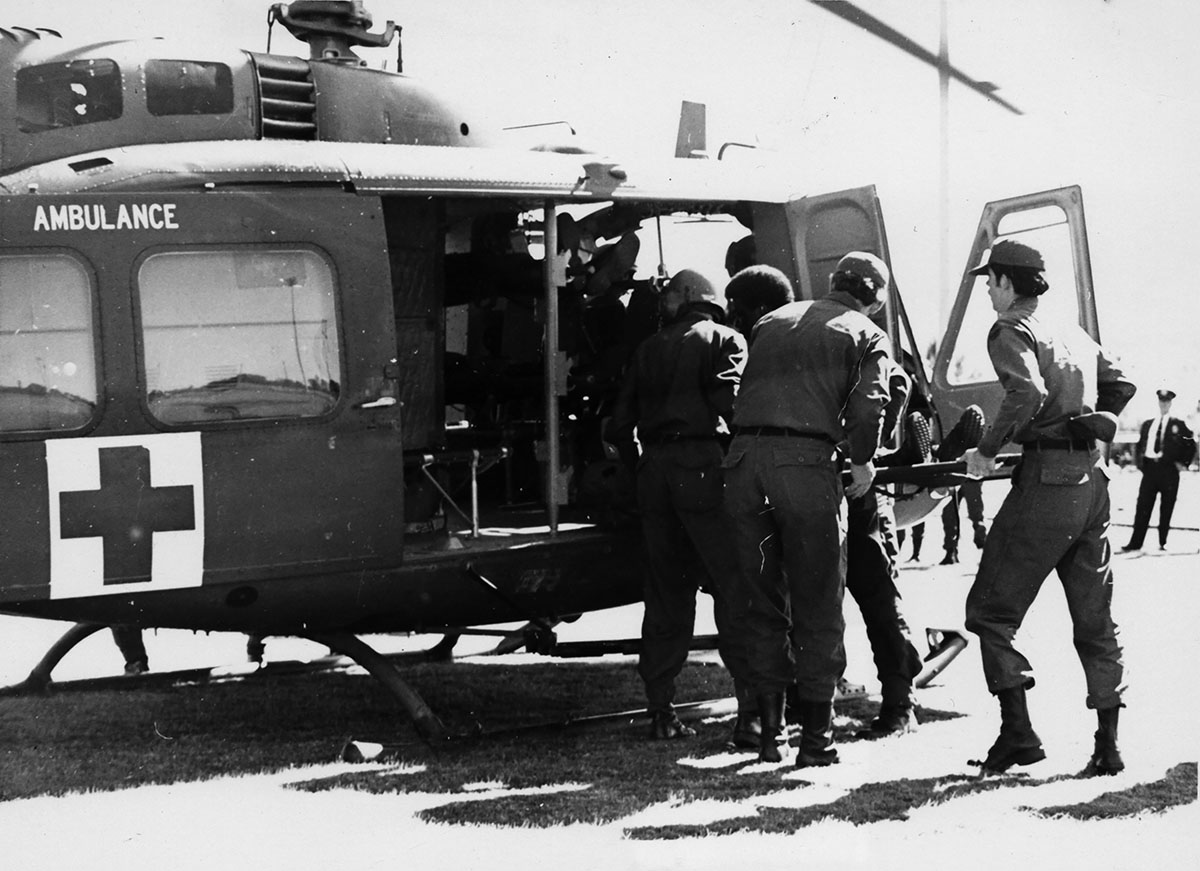
Medevac Hueys were unarmed and carried only a red cross on the front, bottom and on each door. The Viet Cong took no notice of the red cross and regarded medevac helicopters as fair game. This led to losses and immense acts of bravery from many medevac pilots. Due to the danger involved with piloting a medevac helicopter, crews experienced high casualty rates themselves. Around a third of all crews suffered injuries of one kind or another due to hostile fire and crashes. The weather, conditions, terrain and combat all conspired to make being a medevac pilot an extremely dangerous calling indeed.
The primary helicopter used for medevac was the very capable Bell UH-1 Huey. However, it was not the only helicopter to serve in this role during the war. Others included the Sikorsky H-19 Chickasaw, Boeing-Vertol H-21 Shawnee, Kaman HH-43 Huskie, Sikorsky CH-34 Choctaw, Sikorsky CH-37 Mojave and the CH-47 Chinook. All helped with medevac or casevac in one way or another.