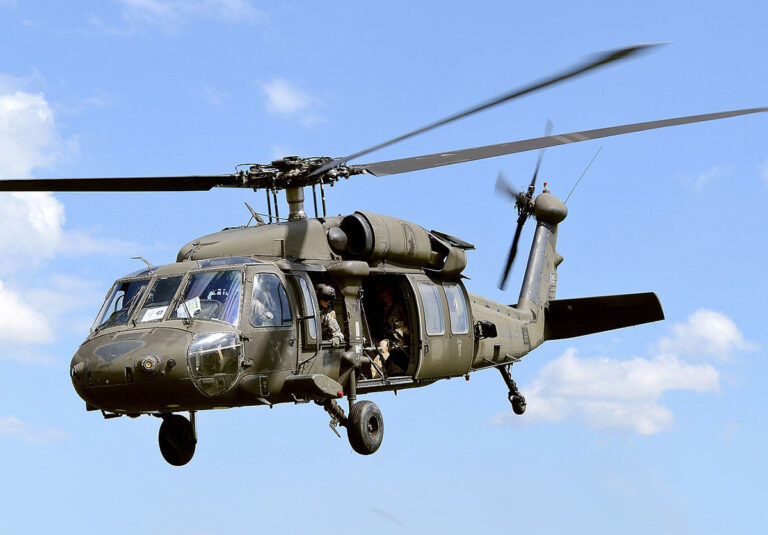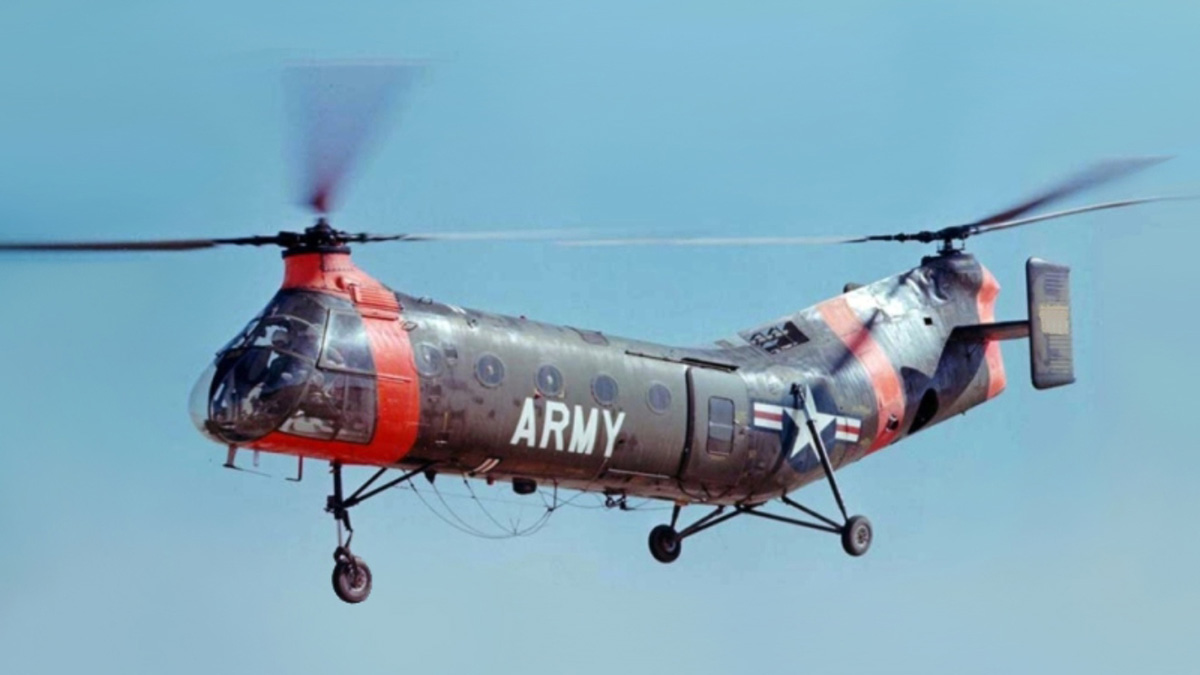
Helicopters in the Korean War

Korean War and the Medevac Helicopter

The development of helicopters during and after the Second World War proved the value and utility of rotary wing aircraft in combat situations. So much so that the Army, Navy and Air Force all set up their own helicopter development units.

This enabled a shift in how critical care was delivered in combat. During previous conflicts, medical stations had to be as close to the front line as possible to shorten the path to care. This led to obvious risks and compromises in both treatment and conditions.  The advent of medevac helicopter meant that field hospitals could be set up in central locations and have patients delivered to them. That meant better care, better conditions and the ability to recover after operations before being evacuated. That alone saved hundreds of lives.
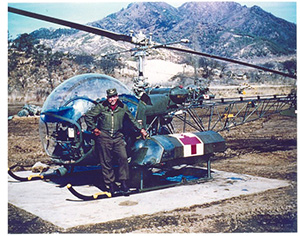
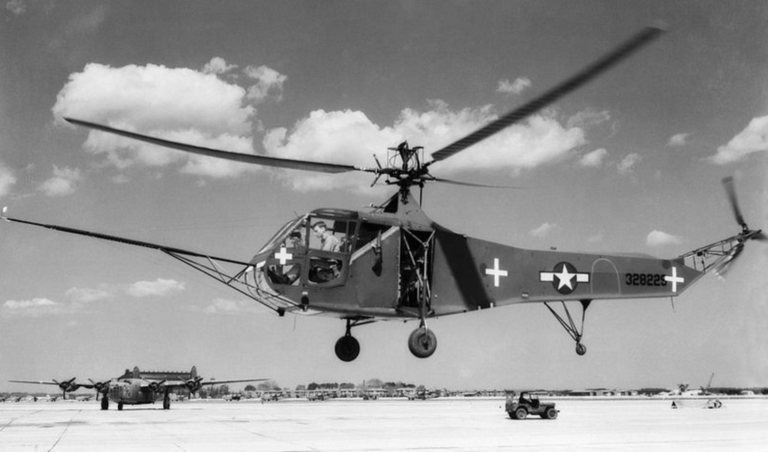
Korean War Medevac Pilot and his helicopter

The Korean War was the formative combat situation for medevac and helicopters in general. The UN forces only had a few helicopters in service at the time but they quickly made use of them.  The U.S. Air Force’s 3rd Air Rescue Squadron was first into action using old H-5 helicopters. These were Sikorsky S-51, originally introduced in 1945 and used throughout the armed forces. Their primary aim was to rescue downed pilots who were shot down. They soon proved their worth and earned the undying gratitude of the air force .

Occasionally, the unit was asked to recover casualties from the line, which they did. This led to calls for more and better helicopters to help out. The arrival of the 2nd Helicopter Detachment and their 4 Bell H-13s heralded a more formal introduction of medevac to combat. The 2nd was quickly followed by the 3rd, 4th and 1st Helicopter Detachments, all using Bell H-13s.

These medevac flights proved so successful that the detachments were moved to become army units as part of the Mobile Army Surgical Hospital (MASH). The H-13 carried stretchers above the skids that were soon covered with a plexiglass “cocoon” for the head by enterprising technicians. This arrangement was quickly modified further to add heating from the engine and a plasma carrier to aid critical care.

MASH ANGELS: Tales of an Air-Evac Helicopter Pilot in the Korean War
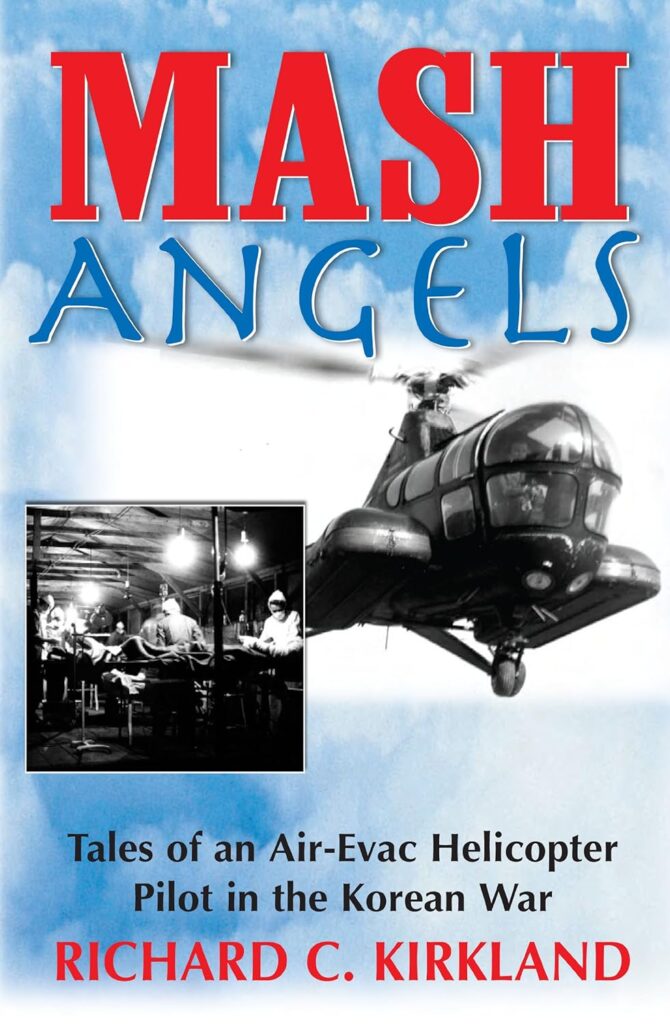
An inspiring first-hand account by military aviation pioneer Richard Kirkland recounts how he and a handful of daring helicopter pilots revolutionized battlefield medical evacuation and blazed the trail for modern air-evac flying. In MASH ANGELS Richard Kirkland recounts his experiences on the front lines of rescue flying and military medicine.

This is a very good read. I don’t know if he wrote his own book or had it ghostwritten, but he tells a pretty good story. The guy has truly been there. It’s like watching M.A.S.H. but you know that none of it was made up (in fact the real Hawkeye is prominent in this book, and Kirkland says the TV version wasn’t that far from the truth). A must-read for war buffs. -klebs

The Bell H-13 helicopter was soon joined by the H-23 Raven which was based on a Hiller Model 360 and the H-19 Chickasaw which was based on the Sikorsky Model S-55. The first was a 3-man helicopter used for close medevac and the latter a medical transport.

There is no doubt that the utility for rotary wing aircraft saved thousands of lives during the Korean War. The Bell H-13 helicopter alone is credited with saving over 18,000 lives during the conflict, earning it the name “Angel of Mercy” from the troops on the ground.  The ability to medevac casualties quickly and smoothly from danger ensured critical care could be delivered to a much higher standard than before. Field hospitals could now be established in semi-permanent bases that could deliver a much higher standard of care and welfare to all servicemen.

The success of medevac also cemented the place of the helicopter in all future combat situations and forced the rapid development of faster, more effective helicopters for military use.

Similar Posts

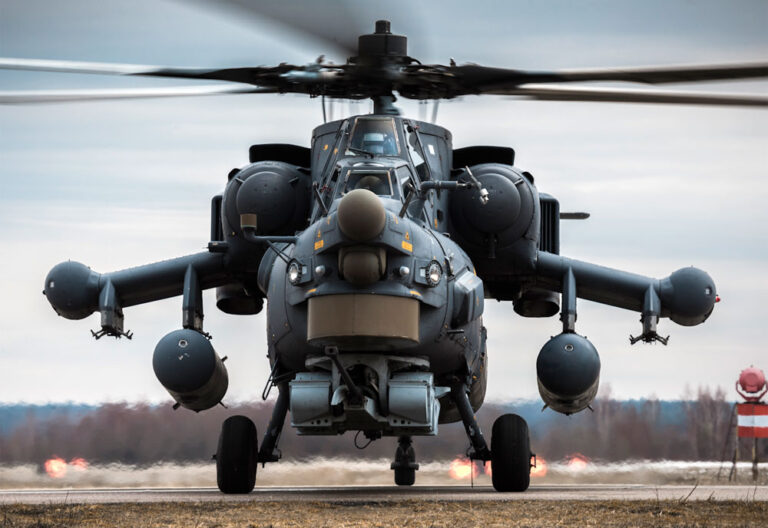
  • The Comprehensive Guide to the Mil Mi-28 Helicopter

    Dive into the world of the Mil Mi-28 helicopter, an engineering marvel that stands tall in the annals of military aviation. This comprehensive guide unravels the rich tapestry of the “Night Hunter,” from its historical inception to its pivotal role on the global stage. Discover the technical intricacies that distinguish the Mi-28, the innovations that set it apart, and its comparative strengths against other iconic helicopters. Further, gain insights into its vast global footprint, from countries that deploy it as a strategic asset to the future upgrades that promise to elevate its prowess. This article is a treasure trove for military enthusiasts, researchers, and anyone intrigued by the blend of technology and strategy in the skies. Embark on a journey with the Mil Mi-28 helicopter, a testament to human ingenuity and a beacon of aerial excellence.

  • The History And Evolution Of Military Helicopters

    Introduction: A Journey Through the Evolution of Military Helicopters In this article, we begin an enlightening journey through the intriguing history of military helicopters. From the earliest experiments in the 1940s, we’ll chart the evolution to today’s sophisticated, multi-role aircraft. This captivating narrative highlights how these incredible machines have dramatically transformed warfare. The next section…

  • US Military Helicopters in Focus

    In the intricate theatre of modern warfare, the US military’s approach to conflict has evolved significantly, particularly within the rugged desert terrains of the Middle East. Central to this evolution are military helicopters, which have seamlessly transitioned from supporting roles to becoming linchpins in war strategy. These formidable flying machines have increasingly been used for vital attack and reconnaissance missions.

    Furthermore, the modern battlescape demands constant adaptation. Consequently, the US military is continuously in pursuit of advanced helicopter designs, encompassing cutting-edge technology to better equip them for their multifaceted roles on the battlefield.

  • CH-47 Chinook Helicopter – Making a Great Helicopter Better

    The CH-47 Chinook Helicopter was an enlarged development of the Vertol Model 107, designated Model 114, which the Army preferred because of its greater capacity.  The prototype was first flown on September 21, 1961, and deliveries to the Army began in 1972 as the CH-47A Chinook.  With large twin rotors powered by relatively new turboshaft engines, plus a cavernous fuselage, the CH-47 offered helicopter airlift capability not previously available. 

  • Kamov Ka-52 Helicopter: The Alligator’s Legacy and Modern Evolution

    The Kamov Ka-52 helicopter, commonly dubbed the ‘Alligator’, is a true marvel of aviation engineering. Renowned for its unique co-axial rotor design, this aircraft stands out not just for its distinctive silhouette but also for its impressive operational capabilities. Our comprehensive article delves into the Alligator’s journey from its conceptual design to its formidable presence on the modern battlefield. We explore its technological advancements, ensuring it remains at the forefront of aerial combat. The Kamov Ka-52’s operational history is a testament to its resilience, with a history that highlights both its might and adaptability. Additionally, with continuous modernization efforts, this helicopter is poised to meet the demands of future warfare. A significant focus is also laid on its global reach, highlighting its current operators and potential export avenues. The article concludes with a reflective look at the Alligator’s enduring legacy and its promising future in the realm of military aviation. Join us in this deep dive into the world of the Kamov Ka-52 and discover why it is a beacon of innovation and excellence.

  • Sikorsky S-60 Helicopter – The Army’s Ultimate Tactical Transport System

    The Sikorsky Model S-60 was proposed to meet the Army’s need for a Utility Tacticla Transport Aircraft System (UTTAS) to replace the UH-1 Iroquois.  The prototype was first flown on October 17, 1974, and the Army ordered 2,260 of the type, designated UH-60 Black Hawk, although budgetary constraints confined the order to 1,400, the first entering service in June 1979.  The Black Hawk is considerably larger than the UH-1 and initial aircraft could carry 20 troops compared with 11, plus a substantial underslung load (8,000lbs).