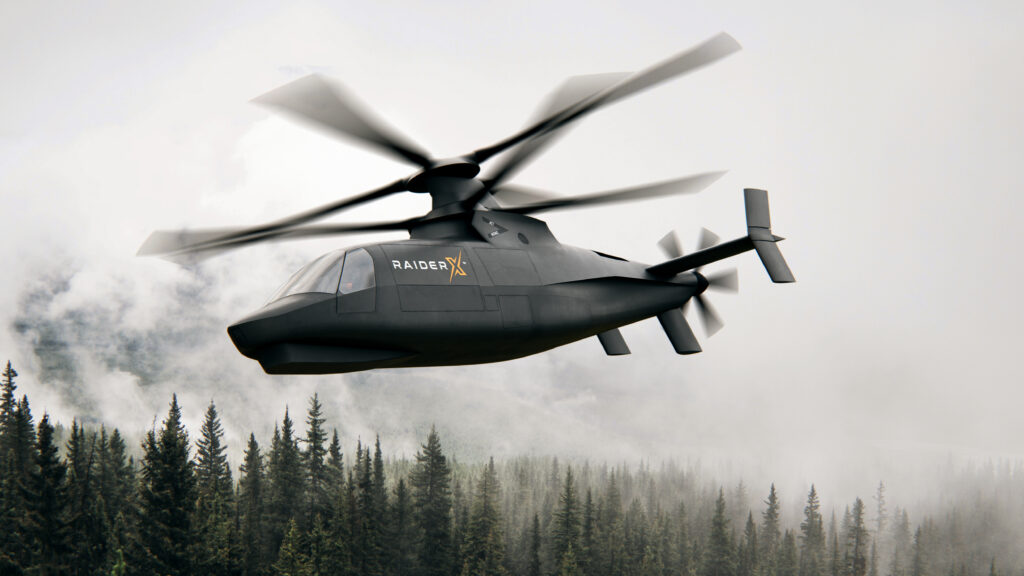
Sikorsky Fara futuristic helicopter

The Future of Military Helicopters: A Historical and Contemporary Analysis

The Journey: Military Helicopters Through Time

Helicopters have played pivotal roles since their start, evolving significantly over the decades. Initially, these machines were simple, intended for reconnaissance and casualty evacuation. However, as the demands of warfare grew, so did the capabilities of these rotary-wing planes. Combat, transportation, search, and rescue, and more – helicopters’ versatility became indispensable.

Legacy of the Recent Past: Top 5 Military Helicopters (2002-2022)

  1. AH-64 Apache: A stalwart since the 1980s, the AH-64 Apache has seen multiple upgrades in the past two decades. Its advanced avionics, firepower, and agility make it one of the premier attack helicopters globally. By 2022, with enhanced stealth capabilities and improved sensors, its reign continues.
  2. MH-60 Romeo: A variant of the Black Hawk, this multi-role naval helicopter boasts advanced anti-submarine and anti-ship warfare capabilities. Its integrated avionics and best performance parameters ensure it is still a favorite among naval forces.
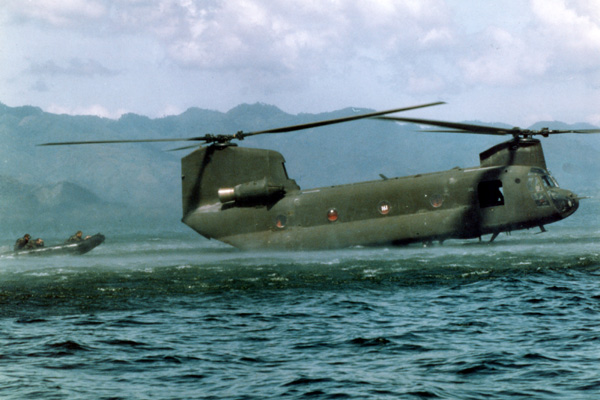
  3. CH-47 Chinook: Recognizable by its tandem rotor design, the CH-47 Chinook has been a dependable heavy-lift helicopter. In recent years, it has seen improvements in payload capacity, new avionics, and better countermeasures against threats.
  4. UH-72 Lakota: Introduced as a light utility helicopter, the Lakota is versatile, performing roles from medical evacuations to homeland security. By 2022, it incorporated better communication systems and safety features.
  5. V-22 Osprey: A marvel in aviation, the V-22 Osprey tiltrotor aircraft combines the versatility of a helicopter with the speed and range of a fixed-wing aircraft. Its adaptability in various missions, from transport to assault, underlines its significance in modern military operations.

Advances Beyond 2022: A New Era of Helicopter Tech

An Illustrated History of Military Helicopters

An Illustrated History of Military Helicopters

A complete history of Army and Navy helicopters from the first visionaries to unmanned aircraft systems. This book, with over 200 helicopter photographs documents every generation of rotorcraft from early prototypes to the specialist helicopters of today.

Amazing text. As a Veteran helicopter mechanic I am passionate about all birds and their histories. Highly recommend this book. It sits firmly on my coffee table to spread the allure to friends and visitors alike. – John J.
Bell 360 Invictus Futuristic Helicopter

Post-2018, technological strides have been remarkable. AI integration, quantum communication systems, and drone symbiosis have become notable trends. With increasing threats in digital warfare, the focus has also shifted towards cybersecurity for these flying machines.

The pilot-less concept envisioned earlier manifested brilliantly. By 2022, autonomous helicopters equipped with advanced AI algorithms began test flights. These machines were designed not only for combat but also for logistical support, reducing the human risk factor in hostile zones.

Additionally, hybrid propulsion systems started gaining traction. The goal was to increase operation time while decreasing the logistical footprint. This not only enhanced mission efficiency but also contributed to a reduced carbon footprint.

What Lies Beyond: A Speculative Glance

The evolution of military helicopters is tethered to the ever-shifting dynamics of warfare. As the nature of threats diversifies – both in the physical and digital realms – so will the multi-dimensional capabilities of these aerial wonders. The integration of AI, renewable energy sources, and even space capabilities, might just be the beginning. The sky, as they say, is no longer the limit.

Similar Posts

  • |

    The Huey Helicopter’s Role in the Final Chapters of Vietnam

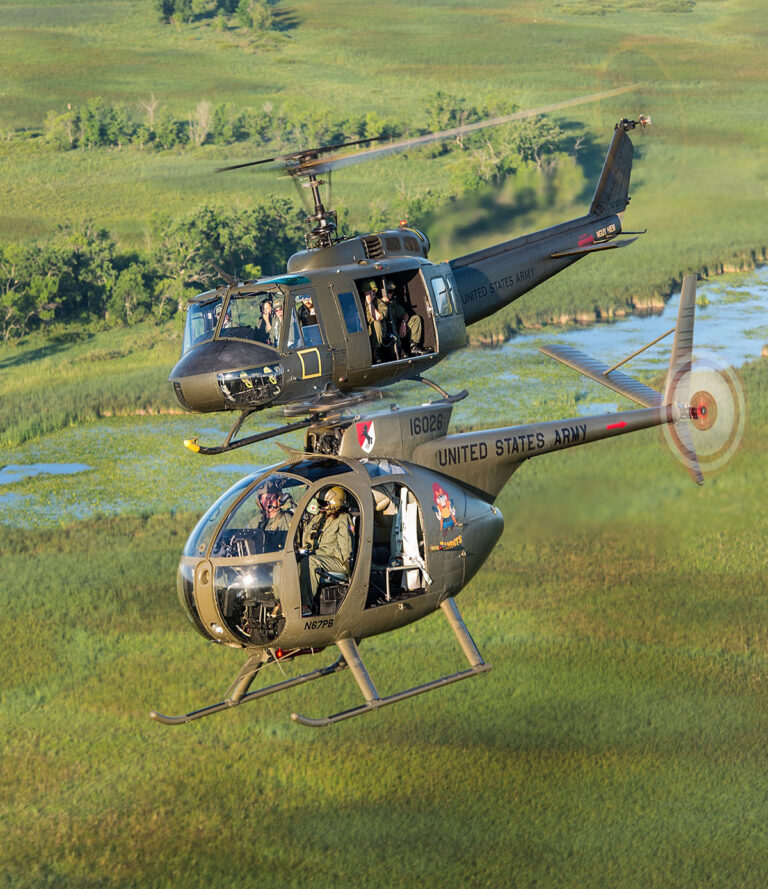
    As the Vietnam War neared its end, the Bell UH-1 “Huey” played an instrumental role in shaping its final chapters. From aiding the US’s drawdown strategy to facilitating desperate evacuations during Saigon’s fall, the Huey was at the conflict’s heart. Yet, its legacy extends beyond combat. Post-war, even as a divided nation sought to heal, the Huey found new life in reconstruction and unification efforts. Dive into the intertwined destinies of a nation and an aircraft and explore how the Huey transformed modern warfare.

  • |

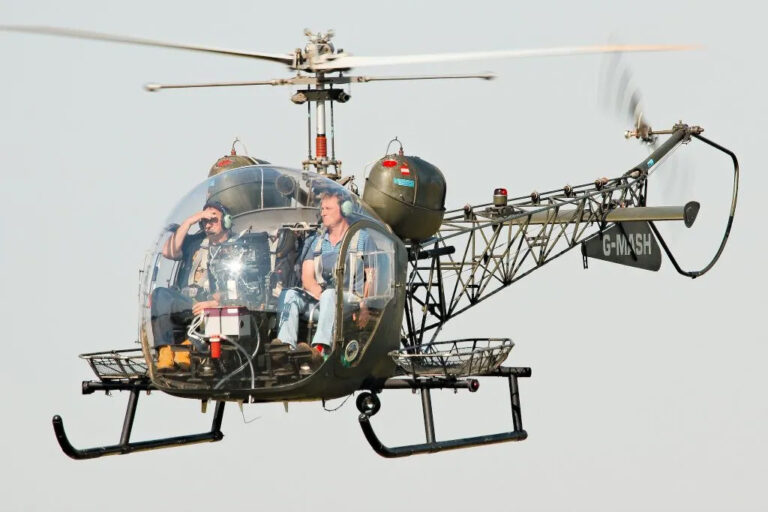
    The History of the Bell 47 Helicopter

    The Bell 47 Helicopter stands as a monumental icon in aviation history. Originating in the mid-20th century, it pioneered roles in both civilian sectors and combat zones. From its crucial interventions in the Vietnam War to its transformative impact on emergency medical services and agricultural tasks, the Bell 47’s versatility and design have left an indelible mark. Journey with us as we explore the rich tapestry of its legacy, innovations, and enduring significance in the world of rotary-wing aircraft.

  • The History of Military Helicopters

    From the pioneering designs of Igor Sikorsky to the fearsome Apache attack helicopter, the evolution of military helicopters reflects a tale of innovation and strategic mastery. Serving as both formidable combatants and vital transporters, these flying marvels have shaped the course of modern warfare. Explore the transformative journey of military helicopters, from their nascent stages during World War II to their current indispensable role in global defense.

  • History of the Hughes OH-6 Cayuse Helicopter

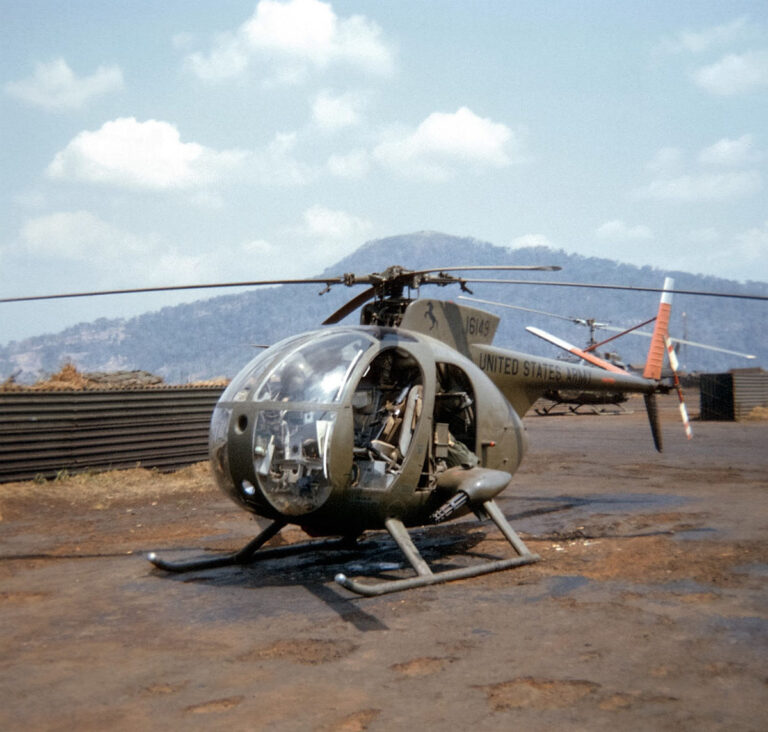
    The inception of the OH-6 Cayuse traces back to the U.S. Army LOH (Light Observation Helicopter) competition in 1963. From its initial identity as the Hughes Model 369, it contended against 12 other designs. The spotlight ultimately centered on three: Hughes’ Model 369, Fairchild-Hillier’s H23 Raven, and Bell’s early OH-58 Kiowa model.

    While Bell’s offering fell short due to its underwhelming power, the Hughes Model 369 – rebranded YOH-6A with a robust 252hp Allison T63-A-5A engine – soared during the trials at Fort Rucker, Alabama in 1963.

  • More CH-47 Chinook Helicopter History

    The Boeing CH-47 Chinook Helicopter has a storied history. Initially developed as an expansion of the Vertol Model 107, it was favored by the Army. Why? Because of its substantial carrying capacity. Its prototype took to the skies on September 21, 1961, and the Army welcomed the CH-47A Chinook in 1972.

    These large twin rotors, combined with a roomy fuselage and cutting-edge turboshaft engines, provided a level of airlift ability previously unseen. Furthermore, the design of the Chinook’s fuselage is primarily free from obstructions, housing the engine and gearbox in pylons and fuel in side pods.

  • The Comprehensive Guide to the Mil Mi-28 Helicopter

    Dive into the world of the Mil Mi-28 helicopter, an engineering marvel that stands tall in the annals of military aviation. This comprehensive guide unravels the rich tapestry of the “Night Hunter,” from its historical inception to its pivotal role on the global stage. Discover the technical intricacies that distinguish the Mi-28, the innovations that set it apart, and its comparative strengths against other iconic helicopters. Further, gain insights into its vast global footprint, from countries that deploy it as a strategic asset to the future upgrades that promise to elevate its prowess. This article is a treasure trove for military enthusiasts, researchers, and anyone intrigued by the blend of technology and strategy in the skies. Embark on a journey with the Mil Mi-28 helicopter, a testament to human ingenuity and a beacon of aerial excellence.